What Repels Bees? Here's What to Do in Palm Beach County
Failing to identify early indicators of bee activity can result in expensive complications. Understand the warning signs, the importance of prevention, and when to contact Native Pest Management.
Key Takeaways
- Standard insect repellent applied to skin or clothing does not deter bees or wasps, so other approaches are needed to keep bees away from your outdoor space.
- Certain natural options, such as citrus spray and almond oil, can help repel carpenter bees from wooden surfaces around your home.
- Preventing bee activity starts with sealing entry points, repairing screen tears, and plugging holes along your foundation line.
- When bees nest inside wall voids or other areas of your home, a professional wearing protective gear can treat the entry points and help resolve the activity.
How to Identify Effective Bee Repellents
Before choosing a repellent strategy, it helps to know which stinging insects you are dealing with and where they are active around your property. Bees and wasps are largely beneficial insects, so accurate identification lets you pick the right approach without disrupting helpful species. According to Kansas State University Extension, many bee species play important roles in pollinating wildflowers and fruit crops, while honey bees provide honey and wax used in many products.
How to Tell Different Bee Types Apart
Bees and wasps belong to the order Hymenoptera and are social insects with duties divided among different castes of adults. Honey bees are fuzzy, golden-brown, and typically travel back and forth to a single entry point on your home. Carpenter bees look similar but are larger, with a shiny black abdomen, and you may notice them hovering near unpainted wood. Wasps tend to have slender, smooth bodies and narrower waists compared to bees.
Each type responds differently to repellent methods. For example, citrus spray or almond oil can help repel carpenter bees, while the same approach may not deter honey bees or wasps from an established hive. Knowing which species is present guides you toward the right deterrent.
How to Spot Bee Activity Inside Your Home
Inside your home, the most common sign of bee activity is a steady buzzing sound coming from wall voids or ceiling spaces. You may also notice bees appearing one or two at a time near windows or light fixtures as they find their way indoors through small gaps. Carpenter bees leave behind small, round holes in exposed wood along with sawdust-like frass beneath those openings.
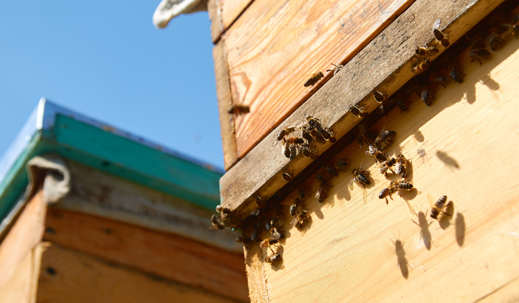
If you see bees coming out of an entry point on the exterior of your home, there may be a hive inside the wall. Honey bees that have been nesting for a while can leave honeycomb inside wall voids, which may need to be removed once the bees are gone.
Where Bee Activity Shows Up Around Homes
Bee activity often centers on flowering plants, standing water, and sheltered spots around the yard. Carpenter bees tend to target soft, unpainted wood on decks, eaves, and fascia boards. Painting or staining wood surfaces can deter carpenter bees from boring into those areas. Plugging existing holes and sealing cracks along your foundation line also reduces attractive nesting sites.
Exterior Entry Points Bees Use
On the exterior, bees enter through gaps in soffits, weep holes in masonry, torn screens, and openings where utility lines meet the wall. If you spot bees flying in and out of a consistent spot, that is likely the entry point to their hive. Repairing screen tears and sealing visible gaps helps keep bees from establishing nests inside your home's structure.
Why Bee Problems Develop
Before you can figure out what repels bees, it helps to understand why they show up around your home in the first place. Bees and wasps are drawn to properties that offer the right combination of nesting sites, food, and shelter. Knowing what creates that pressure makes any repellent strategy more practical.
Outdoor Nesting Areas for Bees
Different species choose different nesting spots, which shapes where problems appear. Bumble bees are social and nest in the ground, and they can become aggressive when that nest is threatened. Some solitary species also nest in ground burrows, and according to Purdue Extension, it can be difficult to tell whether a bee or wasp is social or solitary since some solitary forms exist in nesting aggregations. You can generally distinguish them by watching how many individuals come and go from a single entrance.
Cicada killers also nest in the ground but are active for only about two to three weeks per year and are not aggressive. Their short activity window means the problem often resolves on its own.
Food and Shelter That Attract Bees
Food is the single biggest draw. According to UF/IFAS Extension, yellowjackets and hornets are attracted to sugar sources such as berries and flower nectars, but this becomes a problem when that sugar source is a food or drink being consumed by a person. Keeping sweet items like soft drinks and ripened fruits covered when you are outdoors can reduce encounters.
When food is consistently available near your home, bees and wasps have a reason to stay rather than pass through.
How Bees Move Around Homes
Bees and wasps may arrive as individual foragers before a larger presence develops. Social species send scouts to locate food and nesting opportunities. Once a colony establishes nearby, you may notice steady traffic around entry points on your home's exterior. Only female bees and wasps are capable of stinging, as stingers are modified egg-laying structures that include venom used defensively when a colony is threatened.
Trails and Entry Points Bees Use
Watching the entry point closely is often the best way to gauge the scope of the problem. Multiple individuals coming and going from a single opening typically indicate a social colony rather than a solitary nester. Bumble bee colonies in the ground, for example, can generate noticeable traffic that homeowners may spot along walkways or garden edges.
Attempting to treat a yellowjacket nest on your own carries real risk. As the University of Georgia pest guide notes, a mistake during treatment can result in hospitalization or death from excessive stings. Understanding what attracts these insects is the first step toward keeping them away from the areas where your household spends time.
Risks From Bee Infestations
Understanding what repels bees is helpful, but it is equally important to know the risks that come with bee and wasp activity around your home. Even when you take steps to deter these pests, nesting in the wrong spot or a delayed response can lead to health concerns and property damage worth knowing about.
Health Risks Linked to Bee Stings
Bees and wasps may defend their nests with force, which can lead to dangerous encounters, according to Kansas State University Extension. If these pests build a hive near a doorway, patio, or other high-traffic area, the chance of a defensive response increases. This is one reason repelling bees before they settle in matters so much for your household's well-being.
Africanized bees may also be present in some situations and can pose a serious concern for homeowners who disturb a colony without realizing it.
Property Damage From Bees
Carpenter bees are among the most damaging pests when it comes to wood structures. According to the University of Georgia pest guide, cedar boards are particularly susceptible to extensive damage by carpenter bees. Over time, repeated boring into wood surfaces can weaken fascia boards, decks, and other exposed features around your home.
Mud daubers present a different kind of property concern. These pests build 4- to 6-inch long vertical mud tubes on walls in areas protected from rain and weather. While less structurally harmful, these tubes can be unsightly and difficult to remove from exterior surfaces.
Food Areas and Bee Activity
Bees and wasps can become a nuisance when they enter dwellings or nest in areas frequented by people. Outdoor cooking and dining spaces are common spots where these pests show up. When nests go unnoticed nearby, the risk of a defensive encounter rises during everyday activities.
When to Look Closer at Bee Activity
If you notice pests entering and exiting a specific point on your home's exterior, that often signals an active hive inside a wall void or overhang. Carpenter bee holes in wood surfaces are another sign that repellent measures alone may not be enough. Monitoring these entry points helps you decide whether the situation calls for a closer look or a professional assessment.
Professional Pest Control for Bees
Repelling bees from your home involves more than a single step. A combination of reducing what draws bees to your property, identifying the source of activity, and working with a trained professional can help you manage the situation and keep bees from settling near living spaces.
How to Reduce Attractants for Bees
Bees are drawn to areas that offer food and shelter. One way to redirect bee activity away from your home is to plant a variety of flowering plants in areas farther from doors and windows. According to UC IPM, growing diverse flowering plants can attract and support beneficial insects, which may help draw pollinators toward garden beds rather than toward your home's exterior walls.
For carpenter bees specifically, painting or staining exposed wood may deter them from boring into surfaces. Using hardwood instead of softwood for outdoor structures can also reduce their interest. Plugging existing holes, sealing cracks, and repairing screen tears are additional steps that help limit entry opportunities.
Natural repellents such as citrus spray or almond oil can be applied near carpenter bee activity areas. Treating wood with borate is another option that can deter carpenter bees while helping protect the wood itself.
Why Bee Control Starts With Inspection
At Native Pest Management, the process begins with a free phone consultation to identify the type of bee involved. In many cases, homeowners notice bees entering and exiting through a specific point on the exterior of the home. Knowing the species and the location of the hive is essential before any treatment takes place.
Proper identification matters because different bee species require different approaches. In some states, certain bee removals require specific licensing. For example, the University of Georgia pest guide notes that in Georgia, a person licensed in Honey Bee Removal and Control must be contacted through the state Department of Agriculture. Working with professionals who understand these distinctions helps ensure the right approach from the start.
What to Expect During Professional Bee Treatment
When a Native Pest Management technician arrives, they wear a bee suit for protection and apply product directly to the entry points of the hive. This treatment typically addresses the bee activity within three to five days. The technician then returns to seal the entry points with caulk.
Once the bees are gone, Native Pest Management recommends hiring a handyman or carpenter to open the wall void and remove any honeycombs left behind. Removing honeycomb is a recommended follow-up step once the bees are gone.
What to Expect From a Bee Control Plan
If bees are relocated rather than treated on site, the new location must be at least three miles away to prevent them from returning to the original spot. As Purdue Extension notes, the new site should be verified as low-risk, and nearby growers or applicators should be notified beforehand.
Fall is the ideal time to implement preventive measures for carpenter bees, since nests tend to be empty during that season. Sealing wood, applying natural repellents, and maintaining painted or stained surfaces can help reduce the chance of carpenter bees returning the following year.
Native Pest Management recommends that homeowners act as soon as they notice bee activity, as Africanized bees may be present and can pose a risk to those nearby.
Native Pest Management offers a free phone consultation to identify the issue and recommend the right approach for your situation.
Frequently Asked Questions
How Can I Prevent Carpenter Bees From Nesting?
Fall is the ideal time to take preventive action since carpenter bee nests will be empty. Use hardwood instead of softwood where possible. Paint or stain wood surfaces, plug holes, seal cracks, and repair any screen tears. Applying citrus spray or almond oil to wood surfaces can also help. Borate-treated wood offers additional protection against carpenter bee activity.
What Should I Do If Bees Are Already Burrowing Into My Wood?
If carpenter bees are already active, you have several options. Loud noise near active nests may cause them to disperse, though they could return once the noise stops. Carpenter bee traps hung near visible holes can capture bees that enter thinking the trap is a nest. Sweet almond oil and citrus oil sprayed around and in bee holes may also help deter them from the area.
When Should I Call a Professional?
If you notice bees coming out of an entry point on your home's exterior, it is best to call right away. Africanized bees may be present, posing a serious risk. A technician wearing a bee suit can apply a targeted product to the hive entry points. Activity typically stops within three to five days, and the technician returns to seal the openings with caulk.
Do I Need to Remove the Honeycomb After Treatment?
Once the bee activity has stopped, it is a good idea to have the honeycomb removed from any wall voids. A handyman or carpenter can open the affected area and take out the honeycomb. Once the bees are gone, it is recommended to have a handyman or carpenter open the wall void and remove the honeycomb.