Tiny Flies in House: A South Florida Guide
When early indicators of tiny flies in your house go unnoticed, it can lead to expensive complications. Learn how to recognize the signs and risks of these pests, and when to call Native Pest Management for help.
Key Takeaways About Tiny Flies in Your House
- Several species of small flies can show up in your home, and proper identification is the first step toward getting rid of them.
- These small flies are not biting flies, but they can become a real nuisance when their numbers grow.
- Locating and addressing the breeding source is the most important part of controlling tiny flies in your house.
- Common attractants include biological matter around drains, overwatered houseplant soil, and garbage that sits too long without being emptied.
How to Identify Tiny Flies in Your House
Several species of small, gnat-sized flies occur in homes, and telling them apart is the first step toward solving the problem. Because each type has different habits and breeding preferences, a quick visual check can point you toward the right approach. Below are the features, signs, and locations that help you narrow down what you are dealing with.
How to Tell Tiny Fly Types Apart in Your House
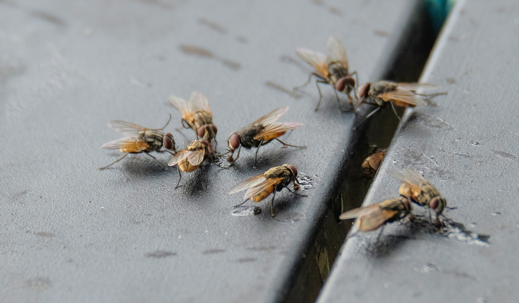
Size and color are the fastest ways to separate common tiny flies. One of the most frequently seen species has adults that measure about 1/16 to 1/8 inch long with red eyes, a pale brown thorax and abdomen, and black stripes on the abdomen. Their small stature and distinctive eye color make them relatively easy to recognize on countertops or near fruit.
Other tiny flies look different. Moth flies, sometimes called drain flies, are associated with drains in kitchens, bathrooms, and laundry areas, where they breed in biological scum that builds up inside drainpipes. According to UC IPM, adult Western cherry fruit flies in the family Tephritidae are noticeably longer at about 3/16 inch and carry a dark banding pattern on their wings, which helps distinguish them from smaller household species.
How to Spot Tiny Fly Activity Inside Your Home
You may first notice tiny flies hovering around kitchen sinks, bathroom drains, or garbage disposals. Some species are drawn to biological scum that builds up inside drainpipes, so a cluster of small flies near a drain is a strong clue. Spotting adults resting on nearby walls or ceilings, especially in bathrooms, is another common sign of an active breeding source.
Identifying the breeding source and either removing it or making it unattractive to the flies is the key to controlling these pests. Pay close attention to where the highest number of adults gather, because that area is usually close to where larvae are developing.
Where Tiny Fly Activity Shows Up Around Your Home
Inside your home, drains are a primary hotspot. According to Mississippi State University Extension, moth flies and some species of phorid flies breed in the biological scum that accumulates on the insides of drainpipes. Garbage disposals can also harbor larvae of some species that feed on the same type of buildup. Kitchens and bathrooms with infrequently used fixtures tend to see more activity.
Exterior Entry Points Tiny Flies Use Around Your Home
Tiny flies can enter through gaps around windows, doors, and any opening that connects the outdoors to your living space. Because several species are attracted to moisture and biological material, exterior drains, downspouts, and areas where standing water collects near your foundation can draw them close to entry points. Keeping these openings sealed and surrounding areas dry helps reduce the number of flies that make their way inside.
Why Tiny Fly Problems Develop in Your House
Tiny flies show up indoors when they find the right combination of moisture, decaying biological matter, and undisturbed breeding sites. Understanding where these conditions come from helps you figure out why a few flies can quickly turn into a persistent nuisance.
Outdoor Nesting Areas for Tiny Flies Around Your Home
Many tiny flies breed in a wide range of decaying biological matter outdoors, including decaying vegetable matter, meat, and animal feces. These outdoor sources can sustain fly populations near your home and push adults toward open doors and windows when conditions are right.
Food and Shelter That Attract Tiny Flies to Your Home
Once inside, tiny flies gravitate toward food sources that often go unnoticed. Phorid flies can breed in accumulations of food matter under or behind appliances. They can also breed in the residue inside garbage cans that are not cleaned frequently and in moist food residues that accumulate under and around stoves and other appliances.
Drain flies breed in drain scum found in sink and sewer drains. According to the University of Georgia pest guide, they can also be found in toilet tanks when toilets have gone unflushed for extended periods. Fungus gnats rely on a different food source altogether. Decaying plant matter in potting soil provides a good food source for their larvae, and they may reproduce year-round on indoor plants.
How Tiny Flies Move Around Your Home
Because these flies develop in decaying biological matter found in sink and sewer drains, they often appear first in kitchens and bathrooms. Fungus gnat adults, while they do not bite or consume household items or food, can become a consistent nuisance as they hover near houseplants throughout the home.
Trails and Entry Points Tiny Flies Use in Your House
Drain openings are a primary entry point. Flies that develop in drain scum or raw sewage within plumbing systems exit into your living space through sink, shower, and floor drains. Garbage cans with uncleaned residue and appliances with hidden food buildup also serve as indoor breeding hubs, allowing populations to grow without an obvious outdoor entry point.
Risks From Tiny Flies in Your House
Even though tiny flies in your house may seem like a minor annoyance, their rapid reproduction and feeding habits can create ongoing concerns for your living space. Understanding the risks they pose helps you decide how quickly to respond.
Health Risks Linked to Tiny Flies in Your House
The health risks tied to tiny house flies depend on the species involved. While many small flies are primarily a nuisance, their presence around food preparation surfaces and living areas is worth monitoring. Flies that rest on walls, windows, and soil can spread to other parts of your home quickly, increasing the areas they contact.
Property Damage From Tiny Flies in House
Fungus gnat larvae remain in the top two to three inches of houseplant soil, where they feed on fungi, algae, and decaying plant matter. According to Kansas State University Extension, these larvae may also feed on roots and leaves resting on the soil surface. However, according to Kansas State University Extension, fungus gnat larvae generally do not damage houseplants, though heavy infestations in very young seedlings may warrant monitoring.
Because a single female fungus gnat may deposit up to 200 eggs in the growing medium of houseplants, populations can surge. Adults live only 7 to 10 days, but each generation can leave behind many larvae ready to continue feeding.
Food Areas and Tiny Fly Activity in Your Home
Tiny flies often show up near kitchens and dining areas. You may see adults resting on plants, soil, windows, or walls, or you might spot them in flight around the room. Their attraction to moist biological material means any area with produce, potted herbs, or damp conditions can draw activity.
Keeping an eye on where adults congregate helps you identify the breeding source. Flies clustering near a specific houseplant or window often point back to a nearby moisture or biological-matter issue.
When to Look Closer at Tiny Fly Activity in House
A few tiny flies near a window may not raise alarm, but a growing number suggests active breeding somewhere inside your home. Because fungus gnats can reproduce year-round on indoor plants, populations may persist without a seasonal break. If you notice adults appearing on multiple surfaces or in several rooms, the breeding source may already be well established and worth investigating further.
Professional Pest Control for Tiny Flies in House
When a small fly infestation keeps returning despite your best efforts, the problem usually traces back to a hidden breeding source. According to Mississippi State University Extension, the best way to control an infestation of small flies is to find and remove their breeding source. That principle guides every step of professional tiny fly control, from the initial inspection through ongoing prevention.
How to Reduce Attractants for Tiny Flies in House
Removing what draws tiny flies into your home is the foundation of lasting control. Dirty, unlined garbage cans can attract phorid flies or fruit flies, and cans that are not emptied frequently create the same problem. Lining your trash cans and taking garbage out regularly removes two common breeding sites.
Wet biological matter in drain saucers used for house plants can support fungus gnats or phorid flies. Let saucers dry out between waterings to reduce buildup. Kitchen, bathroom, and laundry drains can also harbor moth flies or phorid flies when biological residue accumulates inside them.
Empty soda cans, beer cans, wine bottles, or fruit juice bottles saved for recycling are a frequent breeding source for fruit flies. Rinse and store them in a sealed container. A stray tomato or similar produce that has rolled behind the refrigerator can also sustain fruit flies or phorid flies, so check behind appliances once a month.
Why Tiny Fly Control in House Starts With Inspection
A thorough inspection is essential because small fly infestations persist until a service professional locates the breeding source. Many homeowners focus on the adult flies they see in the air, but the real issue is the biological material where larvae develop. A service professional examines drains, garbage areas, recycling bins, houseplant saucers, and hidden spots where produce may have been overlooked.
Breeding sources are not always obvious. A piece of fruit behind the refrigerator or a neglected drain can sustain an infestation for weeks. Inspection narrows down which source is active so control efforts are directed at the right location.
What to Expect During Professional Tiny Fly Treatment in House
Professional control for tiny flies centers on identifying and addressing the breeding source. A trained service professional will walk through your home, checking drains in the kitchen, bathroom, and laundry as well as garbage cans, recycling areas, and houseplant saucers. Once the source is pinpointed, the focus shifts to removing or treating the biological matter that sustains the infestation.
This source-focused approach outperforms adult-only treatments because it interrupts the breeding cycle before new flies develop. Removing the breeding material interrupts the life cycle, which reduces the number of new flies appearing in your home.
What to Expect From a Tiny Fly Control Plan
A control plan from Native Pest Management starts with a detailed inspection of your home. The service professional documents every potential breeding source, from drain buildup to unlined garbage cans, and outlines steps to address each one.
Your plan will also include guidance on reducing attractants between visits. Keeping garbage cans clean and lined, rinsing recyclables, drying out plant saucers, and checking behind the refrigerator for stray produce are practical steps you can take to support ongoing control.
Because small fly infestations can involve more than one breeding source, follow-up inspections help confirm that every contributing site has been addressed. Native Pest Management serves homeowners across South Florida and in Tallahassee, with six office locations to support timely service.
Bottom Line on Tiny Flies in House
Tiny flies in your house are almost always tied to a hidden source of decaying biological matter. Whether the breeding site is a neglected drain, an overwatered houseplant, or an unlined garbage can, lasting relief depends on finding and addressing that source rather than swatting individual flies. A clean, dry home with well-maintained drains and properly stored waste goes a long way toward keeping these pests from multiplying.
If you are dealing with persistent tiny flies in your South Florida home and need help pinpointing the source, contact Native Pest Management to request a free inspection.
Frequently Asked Questions About Tiny Flies in House
Why Do These Flies Keep Coming Back?
Small flies reproduce in decaying biological matter, and even a thin layer of buildup inside a drain or a damp plant saucer can support a new generation. Until the breeding material is removed or made unattractive to the flies, adults may continue to appear even after you clean visible surfaces.
Are Tiny House Flies Harmful?
Because some of these flies develop in drain scum, sewage residue, or other unsanitary material, they can carry pathogens from those sites to other surfaces in your home. Keeping breeding sources clean reduces that risk.
How Can I Tell Which Type of Small Fly I Have?
Several species of small, gnat-sized flies can show up indoors. Observing where the flies gather most often, such as near drains, potted plants, or garbage cans, is the best first step toward narrowing down the type and its breeding source.
What Is the Fastest Way to Reduce Their Numbers?
Focus on the source rather than the adults. Scrub drains, empty garbage cans every one to two days, and reduce excess moisture around houseplants. Removing the biological matter where larvae develop is the most direct way to cut down the population over time.