Protecting Books From Silverfish in Port St. Lucie
Finding irregular holes, scraped areas, or dustlike debris on stored books can be frustrating, especially when the items have personal or financial value. Silverfish are one possible cause. These small, wingless insects hide during the day, move quickly when disturbed, and feed on materials that may include paper with glue or paste, book bindings, wallpaper sizing, and household dust.
A damaged page does not automatically confirm silverfish activity. Firebrats and booklice can also affect paper-based materials, and moisture can create additional problems for stored documents. For Port St. Lucie homeowners, the most useful response is to inspect the surrounding area, reduce humidity, improve storage conditions, and monitor activity before assuming that every mark came from the same pest.
This guide explains how to recognize silverfish, protect books and papers, and decide when recurring signs may justify professional pest-control support.
Key Takeaways: Protecting Books and Papers From Silverfish
- Silverfish may feed on paper with glue or paste, sizing in paper, wallpaper, book bindings, and other starchy materials.
- Look for irregular surface scraping, scattered holes, damaged bindings, dustlike scales, and recurring activity near bookcases or storage containers.
- Moisture control matters. Silverfish prefer humid environments and may remain active in storage areas with leaks, poor airflow, or persistent dampness.
- Keep valuable papers away from garages, hot attics, damp rooms, pipes, windows, and other potential sources of water damage.
- Use shelving and suitable storage containers so books and documents do not sit directly on the floor.
- Vacuum shelves, closets, and storage areas regularly to remove dust, debris, and other food sources.
- Use sticky traps along edges and corners to monitor activity without applying products directly to books or papers.
- Do not spray pesticides onto books, papers, shelves holding exposed documents, or surfaces where food is stored.
- Request a professional inspection when damage continues, multiple rooms show signs of activity, or the source remains difficult to locate.
What Do Silverfish Look Like?
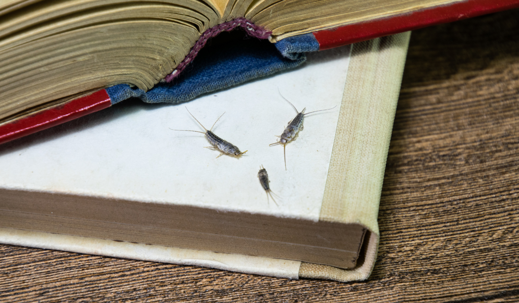
Silverfish are small, wingless insects with slender bodies that taper toward the rear. Their shape is often described as carrot-like. Adults have long antennae and three tail-like appendages at the back of the body.
The UF/IFAS guide to booklice and silverfish describes silverfish as shiny silver or pearl-gray insects that are active at night and hide during the day. When an object covering their hiding place moves, they dart toward another protected area.
How silverfish move
Silverfish move quickly and may appear to wriggle as they run. You may notice one when you move a book, box, or stack of papers that has remained undisturbed for a long period.
Because they are nocturnal, a brief sighting after turning on a light may be the first sign that deserves a closer look.
Where silverfish hide
Silverfish may hide behind books, along closet shelves, behind baseboards, around windows or door frames, and near plumbing openings. They can also gather in bathrooms, laundry areas, and other places where moisture remains available.
A bookcase near a damp wall or a storage closet with limited airflow deserves closer inspection when you notice paper damage.
How Silverfish Damage Books and Papers
Silverfish do not chew paper in the same way a rodent would. Their weak jaws scrape the surface. Over time, this feeding can leave irregular marks, missing surface material, or scattered holes.
The UC IPM guide to silverfish and firebrats explains that these pests may scrape the surface of paper and that feeding can spread as disconnected, irregularly shaped holes. Silverfish and firebrats can also target paper with glue or paste, book bindings, and other starchy materials.
Irregular holes and surface scraping
Look for small, uneven holes or areas where the surface of a page appears grazed or scraped. Damage may be concentrated near an edge, binding, or section that remained undisturbed.
Do not rely on one mark alone. Check nearby shelves, boxes, and papers for additional signs before deciding that silverfish caused the damage.
Binding damage
Book bindings can contain materials that attract silverfish. Inspect the spine, cover edges, and areas where pages meet the binding.
Older or rarely handled books may need closer attention because they can remain undisturbed for long periods.
Dustlike scales and debris
Silverfish and firebrats can leave delicate scales around or beneath damaged items. UC IPM describes these scales as dustlike and slightly reflective in the light.
Use a flashlight to check the shelf beneath a damaged book, the back edge of the bookcase, and nearby corners. Debris alone does not confirm the pest, but it can support your inspection.
Page discoloration
Some damaged areas may show discoloration associated with feeding activity and fungi. A stain on paper does not automatically point to silverfish, so inspect the broader storage conditions as well.
Moisture, mold, and poor storage can create separate preservation concerns that may require a different response.
Silverfish vs. Other Pests Found Near Books
Paper damage and small insects near a bookshelf do not always point to silverfish. Identifying the pest correctly helps you avoid treating the wrong problem.
Silverfish vs. firebrats
Silverfish and firebrats look similar and may damage the same types of materials. Silverfish are generally silver or pearl-gray and prefer damp conditions. Firebrats are mottled gray or brown and tend to favor hotter areas.
UC IPM notes that firebrats may be found around ovens, heating units, fireplaces, hot-water pipes, and attics during warmer periods. Silverfish are more closely associated with moist locations.
Silverfish vs. booklice
Booklice are much smaller than silverfish and are often associated with humidity and mold growth. They may appear among books or papers, but they do not look like silverfish.
The UF/IFAS guide explains that booklice are usually less than 1/16 inch long and may feed on fungi, cereals, pollen, fragments of dead insects, and similar materials. They may also damage book bindings and page edges by feeding on starch sizing.
Silverfish vs. termites
Termites and silverfish do not create the same pattern of activity. Silverfish scrape paper surfaces and may leave irregular holes. Termites can damage wood and other cellulose-based materials as part of a broader structural problem.
If you find damage extending beyond stored papers into wood, walls, or structural materials, request a professional inspection rather than assuming silverfish are responsible.
Silverfish vs. pantry pests
Silverfish may appear near dry foods such as cereal, flour, pasta, or pet food, but they are not the same as pantry moths or pantry beetles. Check whether the activity is concentrated in a kitchen cabinet, bookshelf, closet, or several connected areas.
Why Silverfish Appear Near Books and Papers
Silverfish remain active where food, moisture, and shelter overlap. A quiet storage area with paper, cardboard, dust, and limited airflow can provide favorable conditions.
Humidity and poor airflow
Silverfish prefer moist environments. A storage room, closet, laundry area, or bookcase near a damp wall may support activity when airflow remains limited.
UF/IFAS notes that silverfish and firebrats can be found in places with high humidity and little airflow. Addressing dampness is one of the most useful steps you can take.
Leaks and recurring moisture
Check for plumbing drips, water stains, condensation, and moisture near windows or exterior walls. A small leak can create a more favorable environment for silverfish and cause separate damage to paper-based items.
Repair the source of the moisture rather than relying only on surface cleaning.
Stacks of paper and cardboard
Collections of books, magazines, papers, and cardboard can provide food and hiding places. Boxes stored directly on the floor may also be more vulnerable to moisture.
Reduce unnecessary paper clutter and inspect materials that remain untouched for long periods.
Dust and debris
Silverfish can feed on household dust, debris, dead insects, and certain fungi. A room may look tidy at first glance while still containing material along shelf edges, baseboards, or the floor beneath a bookcase.
Routine vacuuming makes it easier to detect activity and removes some of the resources these pests use.
Gaps around pipes and walls
Silverfish can move through cracks, crevices, and gaps around plumbing or utility lines. Their hiding place may be some distance from the damaged book or paper.
UC IPM notes that silverfish and firebrats can travel long distances while searching for food, which can make the source difficult to pinpoint.
How to Protect Books From Silverfish
Protecting a collection requires more than moving books from one shelf to another. Start with the environment, then improve storage and monitoring.
Keep books off the floor
Store books on stable shelving rather than directly on the floor. This reduces exposure to spills, leaks, and damp surfaces and makes the area easier to inspect.
Keep shelves away from known water sources when possible, including pipes, windows with recurring leaks, and walls that remain damp.
Inspect shelves regularly
Move books periodically and check the shelf surface, the back of the bookcase, and the floor beneath it. Look for insects, scales, debris, holes, and moisture.
UC IPM recommends occasionally moving collections of magazines, papers, and books because they can provide both food and harborage.
Control humidity
Improve airflow and address moisture sources. A dehumidifier may help in a closed, persistently damp area when the unit is appropriate for the space.
For valuable collections, the Library of Congress guide to storing books recommends a cool, relatively dry environment. Stable storage conditions can help protect the books themselves while making the space less favorable to moisture-associated pests.
Vacuum carefully around the collection
Vacuum floors, shelf edges, baseboards, and corners. Remove dust, debris, dead insects, and cobwebs from accessible areas.
Take care around fragile books and papers. Do not use a household vacuum directly on delicate pages, bindings, or archival materials.
Use appropriate storage for valuable items
Documents, photographs, and fragile papers need storage that protects them from bending, water, pests, and handling damage. The National Archives guide to storing family papers recommends keeping items away from damp basements, garages, hot attics, leaks, food, and water. It also recommends storing papers on shelves in acid-free, lignin-free, or buffered containers that fit the materials correctly.
Do not overstuff a box or force papers to bend. For valuable or irreplaceable materials, consider consulting a qualified conservator when damage is already present.
Reduce cardboard storage
Cardboard boxes can add clutter and may provide hiding places. Replace damaged or damp boxes and avoid leaving them directly on the floor.
For everyday household materials, choose clean, dry storage containers suitable for the contents. For archival papers, use appropriate acid-free storage rather than sealing damp materials inside a container.
Monitor with sticky traps
Sticky traps can help show whether silverfish remain active and where they travel. Place traps along edges and corners near bookcases, closets, or storage areas, following the product instructions.
Keep traps away from children, pets, and valuable papers. A trap supports monitoring, but it does not replace moisture correction and cleaning.
How to Protect Papers and Important Documents
Books and loose papers do not need identical storage. Important documents benefit from containers that fit correctly and reduce physical damage as well as pest exposure.
Use suitable archival containers
Choose folders and boxes that allow papers to lie flat or stand upright without bending. Avoid overfilling containers.
The National Archives recommends acid-free, lignin-free, or buffered storage materials for family papers and photographs.
Keep documents away from water sources
Do not store important papers beneath pipes, beside windows with recurring leaks, or directly on the floor. Use shelving to reduce the risk of water exposure.
Avoid garages and hot attics for valuable papers
Garages and attics can expose documents to fluctuating temperatures, moisture, insects, and other risks. The National Archives recommends keeping family papers out of damp basements, garages, and hot attics.
Separate damaged materials
If you find active insects, visible mold, or significant damage, move the affected materials away from the rest of the collection carefully. Avoid shaking debris onto nearby books or papers.
Use a clean, dry area for temporary isolation and seek professional preservation advice for valuable or irreplaceable items.
How to Inspect a Port St. Lucie Storage Area
A structured inspection can help you identify whether the problem is limited to one shelf or connected to a broader moisture issue.
Step 1: Check the surrounding room
Look for leaks, water stains, condensation, poor airflow, and damp materials. Inspect nearby bathrooms, laundry areas, plumbing lines, and exterior walls when relevant.
Step 2: Remove books carefully
Take books from the shelf one at a time. Examine the binding, cover edges, page edges, and shelf surface.
Keep visibly damaged items separate while you inspect the rest of the collection.
Step 3: Inspect boxes and papers
Check cardboard boxes, folders, magazines, and paper stacks for insects, irregular holes, scraped surfaces, scales, and moisture.
Replace damp or damaged containers. Do not seal wet materials inside a storage bin.
Step 4: Vacuum the area
Vacuum the floor, shelf edges, baseboards, corners, and accessible gaps. Remove household dust and debris that can provide food or conceal activity.
Step 5: Place monitoring traps
Use sticky traps in dry corners and along edges near suspected activity. Follow the product instructions and check the traps regularly.
Step 6: Reorganize storage
Return clean, dry materials to suitable shelving or containers. Keep the floor clear and leave enough space to inspect the room during future checks.
What Not to Do Around Books and Papers
Do not spray pesticides directly on books or papers
Do not apply sprays, powders, or other pest-control products directly to books, documents, photographs, or archival materials. These products may damage valuable items or create avoidable exposure concerns.
When an infestation is significant, request professional guidance so treatment can focus on appropriate areas rather than the collection itself.
Do not rely on pesticide alone
UC IPM notes that insecticides are not required for light infestations or occasional insects and that chemical control will not work well unless moisture, food, and hiding places are also addressed.
Do not store valuable papers in a damp garage
A garage may seem convenient, but it can expose papers to moisture, temperature changes, insects, and water damage. Store important materials in a more stable indoor area when possible.
Do not seal damp materials inside containers
A closed container will not solve a moisture problem. Make sure books and papers are dry before storage.
Do not assume every damaged page came from silverfish
Firebrats, booklice, moisture, mold, and other conditions can affect paper-based materials. Look for the pest itself, monitor the area, and request identification when the source remains unclear.
Do Silverfish Create Health Risks?
Silverfish are primarily a nuisance and property-damage concern. The main issue is their feeding activity around books, papers, wallpaper, dry foods, and other materials.
Avoid unnecessary pesticide use around storage areas. For an isolated sighting, start with cleaning, moisture control, exclusion, and monitoring. Follow all product labels carefully if you use any pest-control product.
When to Request Professional Pest-Control Support
A small issue may improve after you reduce humidity, clean shelves, reorganize storage, and monitor the area. Professional support becomes more useful when the source remains difficult to locate or damage continues.
Consider requesting an inspection when:
- You keep finding silverfish or firebrats near books, papers, or storage boxes.
- Sticky traps continue capturing insects after cleaning and moisture control.
- Books, bindings, papers, or wallpaper show recurring damage.
- Several closets, rooms, or storage areas show activity.
- You notice leaks, persistent dampness, or inaccessible gaps around plumbing and walls.
- You cannot distinguish silverfish from firebrats, booklice, or another pest.
- Valuable or irreplaceable materials may be at risk.
Native Pest Management lists silverfish among the pests it services and provides residential pest-control services in Port St. Lucie. A professional inspection can help identify where activity is concentrated and recommend an appropriate plan for your home.
What a professional inspection should cover
A professional inspection should assess the affected bookcases, closets, storage containers, nearby plumbing, moisture sources, baseboards, wall gaps, and any connected rooms where activity may be present.
The goal is to determine whether the issue involves isolated sightings, a broader moisture problem, or hidden activity that routine cleaning has not addressed.
What a silverfish-control plan may include
The right plan depends on the scope of the activity. Recommendations may include moisture correction, cleaning, clutter reduction, exclusion work, monitoring, and targeted pest control in appropriate areas.
Long-term improvement requires attention to the conditions that allow silverfish to remain active, especially moisture, food sources, and protected hiding places.
Bottom Line: Protect the Collection and the Storage Environment
Silverfish can damage books and papers when they find the right conditions: moisture, shelter, and access to starchy materials such as glue, paste, and bindings. A few practical changes can make your storage areas less favorable to them.
Start by keeping books off the floor, controlling humidity, fixing leaks, vacuuming shelves and baseboards, reducing cardboard clutter, and monitoring activity with sticky traps. Store valuable documents in suitable archival containers and keep them away from garages, hot attics, and water sources.
If silverfish keep appearing or damage continues, request a free quote from Native Pest Management to discuss activity around your Port St. Lucie home.
Frequently Asked Questions
Why are silverfish attracted to books and papers?
Silverfish may feed on paper with glue or paste, sizing in paper, book bindings, and other starchy materials. Books, papers, and magazines can also provide protected hiding places when they remain undisturbed.
What does silverfish damage look like on paper?
Look for irregular surface scraping, scattered holes, damaged bindings, and dustlike scales or debris near affected materials. Damage alone does not confirm the pest, so inspect the surrounding area and monitor for activity.
Should I store books in plastic bins?
For everyday household materials, clean, dry lidded containers may help reduce exposure to pests and dust. Do not seal damp materials inside a bin. For valuable papers and archival materials, use appropriate acid-free storage containers and keep them in a stable, dry indoor environment.
Can silverfish damage important documents?
Yes. Silverfish may scrape paper surfaces and damage bindings or materials containing glue, paste, or starch. Store important documents off the floor and away from moisture sources.
Are silverfish and booklice the same pest?
No. Silverfish are larger, silver or pearl-gray insects with tapered bodies and three tail-like appendages. Booklice are much smaller and are often associated with humidity and mold growth.
How can I monitor for silverfish?
Place sticky traps along edges and corners near bookcases, closets, or storage areas. Follow the product instructions and keep traps away from children, pets, and valuable papers.
Should I spray pesticides on a bookshelf?
Do not spray pesticides directly on books, papers, or exposed archival materials. Start with cleaning, moisture control, storage improvements, and monitoring. Request professional guidance when activity continues.
When should I call a pest-control professional?
Request an inspection when damage continues, sticky traps keep capturing insects, several rooms show activity, moisture remains difficult to correct, or valuable materials may be at risk.