Signs of Clothes Moth Webbing in West Palm Beach Closets
Finding fine webbing on a sweater, blanket, rug, or closet shelf can raise an immediate question: are clothes moth larvae feeding on your stored fabrics?
Clothes moths are easy to overlook because the adults are small and tend to avoid light. The larvae cause the damage. As they feed, they may leave silk threads, webbing patches, feeding tubes, or portable cases near vulnerable materials. These signs can help you distinguish clothes moth activity from carpet beetles, pantry moths, and other household pests.
For West Palm Beach homeowners, the most useful first step is a careful closet inspection. This guide explains what clothes moth webbing looks like, where to check for hidden activity, how to protect affected items, and when recurring signs may justify professional pest-control support.
Key Takeaways
- Clothes moth larvae cause fabric damage. Adult moths do not feed on clothing.
- Webbing clothes moth larvae may leave silk patches, feeding tubes, fabric particles, and waste on or near the materials they consume.
- Casemaking clothes moth larvae carry portable silken cases as they move and feed.
- Inspect wool, fur, feathers, rugs, upholstered furniture, stored blankets, and other animal-derived materials.
- Carpet-beetle larvae may damage similar fabrics but do not produce silk webbing.
- Pantry moth webbing appears around stored food rather than clothing, rugs, or closet shelves.
- Remove affected items, vacuum storage areas thoroughly, clean vulnerable fabrics, and store pest-free items in airtight containers.
- Use mothballs only as directed on the product label inside airtight containers. Do not scatter them loosely inside closets or living spaces.
- Request an inspection when webbing, larvae, or new damage continues after cleaning.
What Does Clothes Moth Webbing Look Like?
Clothes moth webbing can be subtle. You may notice fine silk threads, small patches of webbing, feeding tubes, debris stuck to the fabric, or tiny cases attached to a garment or nearby surface.
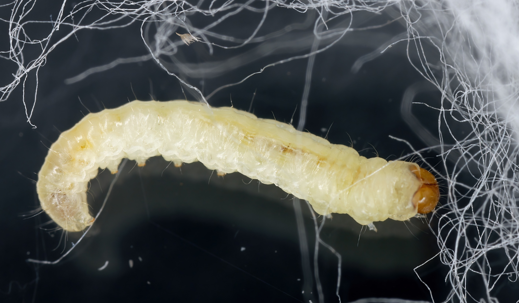
The UC IPM guide to clothes moths explains that webbing clothes moth larvae may produce patches of silk that collect excrement and fabric particles. These materials can form temporary feeding tubes. When the larvae move to another feeding area, they leave some of the webbing behind.
Not every strand of material in a closet confirms an infestation. Dust, lint, spider webs, and loose fibers can look similar at first glance. Clothes moth webbing becomes more suspicious when it appears beside irregular holes, surface grazing, larvae, cases, or debris on vulnerable fabrics.
Fine silk threads on fabric
Webbing may look like a thin layer of silk spread across the surface of a garment, rug, blanket, or upholstered item. It can collect fibers and debris, making the area look dusty or matted.
Inspect the hidden parts of the item as well as the visible surface. Larvae often feed in protected areas where they are less likely to be disturbed.
Feeding tubes attached to the material
Webbing clothes moth larvae can create silk tubes close to the fibers they consume. These tubes may blend into the fabric because they collect particles from the damaged material.
Look closely along seams, folds, cuffs, collars, rug edges, and the underside of stored textiles.
Small portable cases
Casemaking clothes moth larvae behave differently. They carry a silken case as they move and feed. The case may appear cigar-shaped and can incorporate fibers from the material, which helps it blend into the background.
A case attached to a garment, wall, shelf, or closet surface is an important clue. However, Florida homes can also contain other case-bearing insects, including household casebearers. Identification matters before you decide which response is appropriate.
Debris near damaged areas
Webbing can collect fabric particles and larval waste. You may notice a small concentration of debris near a hole or worn area.
The UF/IFAS clothes-moth guide notes that damaged fabrics often show irregular holes along with silken cases, silk threads, and fecal pellets on the surface.
How to Identify Clothes Moth Larvae
The larval stage causes the damage. Adult clothes moths can help you recognize that an infestation may be present, but the larvae are the insects feeding on your stored belongings.
Webbing clothes moth larvae
Webbing clothes moth larvae are small, pale caterpillars. They feed on vulnerable materials and leave silk patches or feeding tubes behind.
The silk may collect waste and fragments from the fabric, which makes the feeding area easier to overlook. What appears to be lint or dust may deserve a closer inspection when you also notice holes or worn patches.
Casemaking clothes moth larvae
Casemaking clothes moth larvae also feed on animal-derived materials, but they remain inside portable cases. The cases move with the larvae and may appear on fabrics, closet surfaces, walls, or nearby crevices.
The UC IPM image of a casemaking clothes moth larva shows the silken feeding case attached to the larva.
Adult clothes moths
Adult clothes moths are small and usually buff or golden in color. They tend to remain close to infested materials and often avoid bright light.
The adults do not damage clothing. However, seeing small moths near a closet, drawer, rug, or storage area is a reason to inspect fabrics carefully for larvae and webbing.
Where Clothes Moth Webbing Appears in Closets
Clothes moth larvae favor quiet, protected areas where vulnerable items remain undisturbed. A quick glance at the front of a closet may miss the evidence.
Along seams, cuffs, and collars
Inspect the hidden parts of stored clothing first. Look beneath collars, inside cuffs, along seams, inside pockets, and between folded layers.
Pay closer attention to garments that have remained untouched for months. Seasonal wool sweaters, coats, scarves, and formalwear can stay undisturbed long enough for damage to develop unnoticed.
Inside folded blankets and stored textiles
Open folded blankets, throws, and other stored fabrics rather than checking only the outer surface. Examine the interior folds for silk patches, cases, larvae, and irregular holes.
Do not place a suspicious item back into the closet with clean belongings. Keep it separated while you inspect the surrounding area.
Beneath rugs and carpet edges
Clothes moth larvae may feed on wool rugs and carpets. Check the underside, rug edges, areas beneath furniture, and sections that rarely receive vacuuming.
Carpet-beetle larvae can also damage rugs. Webbing and feeding tubes point more strongly toward clothes moths, while bristly larvae and shed skins without webbing suggest carpet beetles.
Inside upholstered furniture
Inspect furniture crevices, fabric folds, and protected areas beneath cushions. Animal-derived materials inside or on the surface of furniture can provide a food source.
A closet may not be the only area affected. Extend the inspection when you notice activity on nearby rugs or furniture.
Behind shelves and storage bins
Move boxes and containers carefully. Look for silk cases, larvae, webbing, lint, or fabric debris along shelf corners, closet floors, baseboards, and wall edges.
Use a flashlight and avoid shaking an affected item near clean clothing.
Which Fabrics Are Most Vulnerable?
Clothes moth larvae primarily feed on animal-derived materials. Synthetic fabrics usually do not provide the same food source, although a blended item may still be vulnerable when it contains wool or another animal fiber.
Wool and wool blends
Inspect wool sweaters, coats, suits, scarves, blankets, rugs, felt items, and wool-containing blends. Pay special attention to garments stored for long periods.
Fur, feathers, and animal hair
Clothes moth larvae may also feed on fur, feathers, animal hair, and similar materials. Check feather-filled items, fur-trimmed garments, natural-bristle brushes, and stored accessories.
Items with stains or residue
Cleaning clothing before storage matters. Residue from perspiration, food, or spills can make stored garments more attractive to fabric pests.
Launder washable items according to their care labels and take delicate fabrics to a dry cleaner when appropriate.
Clothes Moth Webbing vs. Other Household Pest Signs
Not every web or case in a closet comes from clothes moths. The location, surrounding materials, and type of debris can help you narrow the source.
Clothes moths vs. carpet beetles
Both pests can damage animal-derived fabrics. Clothes moth larvae may leave silk webbing, feeding tubes, or portable cases. Carpet-beetle larvae do not spin silk webs. They often appear brown or bristly and may leave shell-like cast skins near damaged items.
The UF/IFAS profile of black carpet beetles notes that cast larval skins are often visible on infested fabrics and can be mistaken for living larvae.
Clothes moths vs. pantry moths
Pantry moth larvae may also produce webbing, but the webbing usually appears around stored food. Check flour, cereal, rice, pet food, birdseed, nuts, and other dry goods when the activity is concentrated in a kitchen or pantry.
Webbing on wool, fur, rugs, or stored garments points more strongly toward clothes moths.
Clothes moth cases vs. household casebearers
Household casebearers, sometimes called plaster bagworms, can appear on walls and inside closets in Florida homes. Their cases often include lint, dust, and debris.
A case on a wall does not automatically confirm clothes moth activity. Look at the material being damaged and request identification when the source remains unclear.
Clothes moth webbing vs. spider webs
Spider webs usually span an open corner, gap, or sheltered area rather than adhering closely to a damaged garment. Clothes moth webbing tends to sit on or near the material the larvae are feeding on.
Check for larvae, holes, cases, and fabric debris before assuming that a thin strand of silk came from clothes moths.
How to Inspect a West Palm Beach Closet for Clothes Moths
A thorough inspection gives you a clearer picture of the affected area and helps prevent larvae from remaining hidden among stored items.
Step 1: Remove items carefully
Take garments, boxes, and stored textiles out of the closet one at a time. Separate anything with visible webbing, cases, larvae, or damage.
Place suspicious items in sealed bags while you decide whether they can be cleaned, treated, or discarded. This helps reduce the chance of moving larvae into another room.
Step 2: Inspect vulnerable materials
Check wool, fur, feathers, rugs, blankets, upholstery, and animal-fiber accessories. Look along seams, folds, cuffs, collars, pockets, and hidden surfaces.
Do not assume an item is unaffected because the visible side looks clean.
Step 3: Vacuum the closet thoroughly
Vacuum shelves, corners, baseboards, cracks, rug edges, and the closet floor. Remove lint, hair, debris, and any visible insect material.
Dispose of the vacuum contents promptly after cleaning an affected area. Larvae, eggs, or debris may remain inside the bag or canister.
Step 4: Clean affected fabrics
Launder washable items according to the care label. Use professional dry cleaning for delicate garments when appropriate.
The National Pesticide Information Center guide to clothes moths recommends cleaning affected items, storing cleaned items inside airtight containers, and continuing to monitor for signs of moths.
Step 5: Store clean items securely
Place clean, pest-free garments in sturdy airtight containers with secure lids. Make sure every item is clean and dry before storage.
Do not seal an untreated garment inside a container with clean clothing. A sealed bin will not solve a problem already inside the fabric.
Step 6: Monitor the area
Continue inspecting the closet after cleaning. Look for new webbing, larvae, cases, adult moths, or fresh fabric damage.
Pheromone traps labeled for clothes moths can support monitoring. They do not replace cleaning, inspection, or treatment of affected items.
What to Do When You Find Clothes Moth Webbing
Separate affected items
Keep damaged or suspicious fabrics away from clean garments. Use sealed bags while you inspect the rest of the closet.
Clean the closet before returning clothing
Vacuum and wipe accessible surfaces before moving pest-free items back into the space. Focus on cracks, baseboards, shelf corners, and floor edges.
Follow the care label for each garment
Washing, drying, or dry cleaning may help address insects on affected items when the fabric can tolerate the process. Follow the care label to avoid damaging valuable belongings.
Consider freezer treatment for appropriate items
NPIC recommends placing small, non-washable items in a freezer for two weeks to kill insects. Confirm that the material can tolerate freezing before using this approach.
Use monitoring traps correctly
Pheromone traps can help track webbing clothes moth activity. Place traps as directed on the product label and use them as a monitoring tool rather than a complete solution.
What Not to Do When Clothes Moths Appear
Do not scatter mothballs around the closet
Mothballs are pesticides. They should not be left loose on shelves, closet floors, drawers, attics, or living areas.
The NPIC guidance on proper mothball use explains that mothballs should be placed inside tightly closed containers so pesticide vapors do not accumulate in living spaces where people and pets can breathe them.
Do not store uncleaned clothing
Putting a worn garment directly into a storage bin can allow activity to continue. Clean vulnerable items before long-term storage.
Do not rely on adult moth sightings alone
An adult moth can signal a problem, but inspection should focus on the materials larvae feed on. Look for silk, larvae, cases, and damage.
Do not assume every case belongs to a clothes moth
Florida homes may contain other case-bearing insects. Identification matters when the case appears on a wall without clear fabric damage nearby.
Do not ignore nearby rugs or furniture
A closet cleanup may miss larvae feeding beneath a rug, inside upholstery, or in another quiet storage area. Extend the inspection when activity continues.
Do Clothes Moths Create Health Risks?
Clothes moth larvae do not bite or sting people. They are primarily a fabric-damage concern rather than a direct health threat.
The more immediate risk is to valuable belongings: wool garments, rugs, blankets, furniture, fur, feathers, and other animal-derived materials. Early inspection can limit the amount of damage.
When to Request Professional Pest-Control Support
A small, isolated issue may improve after you clean affected items, vacuum thoroughly, and store pest-free fabrics correctly. Professional support becomes more useful when activity continues or the source remains difficult to identify.
Consider requesting an inspection when:
- You continue finding new webbing, larvae, cases, or adult moths after cleaning.
- Several closets, rooms, rugs, or upholstered items show signs of activity.
- You cannot distinguish clothes moths from carpet beetles, pantry moths, or household casebearers.
- High-value clothing, rugs, furniture, or stored textiles may be affected.
- Webbing returns after you clean and secure vulnerable items.
- You suspect hidden activity beneath rugs, inside furniture, or in inaccessible storage areas.
Native Pest Management provides residential pest-control services from its West Palm Beach office. A professional inspection can help identify the pest, locate overlooked sources, and recommend the appropriate next step for your home.
What a professional inspection should cover
A professional inspection should examine the affected closet, vulnerable fabrics, storage containers, nearby rugs, upholstered furniture, baseboards, floor edges, and any areas where cases or webbing continue to appear.
The goal is to identify the pest correctly and locate every area where larvae may be feeding.
What a clothes-moth control plan may include
The right plan depends on the scope of the activity and the materials affected. Recommendations may include cleaning, item-specific treatment, airtight storage, monitoring traps, vacuuming, and targeted pest control for affected areas.
Follow-up monitoring matters because larvae and eggs can remain hidden in folds, seams, and protected spaces.
Inspect the Webbing and the Fabric Beneath It
Silk webbing on a wool sweater, blanket, rug, or closet shelf can be an early sign that clothes moth larvae are feeding nearby. Look for additional clues such as irregular holes, feeding tubes, portable cases, larvae, and debris attached to vulnerable fabrics.
Start with a thorough inspection. Separate affected items, vacuum the closet, clean fabrics according to their care labels, and store pest-free belongings in airtight containers. Use mothballs only as directed on the label inside sealed containers.
If webbing or new damage keeps appearing, request a free quote from Native Pest Management to discuss activity in your West Palm Beach closets.
Frequently Asked Questions
What does clothes moth webbing look like?
Clothes moth webbing may look like fine silk threads, small patches, or temporary feeding tubes attached to a vulnerable fabric. It can collect debris, waste, and fibers from the material the larvae are consuming.
Do clothes moth larvae damage clothing?
Yes. The larvae cause the damage. Adult clothes moths do not feed on clothing. Look for irregular holes, silk webbing, cases, and debris on wool and other animal-derived materials.
Where should I check for clothes moth webbing?
Inspect seams, cuffs, collars, pockets, folds, closet corners, shelf edges, stored blankets, wool rugs, and upholstered furniture. Check the hidden side of each item rather than looking only at the visible surface.
How can I tell clothes moth damage from carpet-beetle damage?
Clothes moth larvae may leave silk webbing, feeding tubes, or portable cases. Carpet-beetle larvae do not produce silk webbing. They often leave bristly shed skins near damaged items.
Can pantry moths leave webbing too?
Yes. Pantry moth larvae can produce webbing around stored food. Webbing near flour, cereal, rice, pet food, or birdseed points toward a pantry pest, while webbing on wool or stored garments points more strongly toward clothes moths.
Should I place mothballs directly in my closet?
No. Mothballs are pesticide products and should only be used as directed on the label inside airtight containers. Do not scatter them loosely inside closets, drawers, attics, or living spaces.
Can I freeze clothing to address clothes moths?
Freezer treatment may be appropriate for some small, non-washable items. NPIC recommends freezing suitable items for two weeks. Confirm that the material can tolerate freezing before using this approach.
When should I call a pest-control professional?
Request an inspection when webbing, larvae, cases, or new damage continues after cleaning; several areas are affected; high-value items may be at risk; or the pest remains difficult to identify.