Clothes Moths vs Carpet Beetles in Melbourne Closets
Finding holes in a wool sweater, blanket, rug, or stored garment can raise an immediate question: are clothes moths or carpet beetles responsible?
Both pests can damage animal-based materials, and both tend to remain hidden in quiet storage areas until the evidence becomes visible. However, they do not leave the same clues behind. Clothes-moth larvae may produce silk webbing or small portable cases near the fabric they feed on. Carpet-beetle larvae are usually bristly and may leave shed skins near baseboards, closet corners, rugs, and furniture.
For homeowners in Melbourne, the most useful first step is a careful inspection. This guide explains how to compare the signs, clean affected storage areas, protect vulnerable items, and know when recurring activity needs professional attention.
Key Takeaways: Clothes Moths vs Carpet Beetles
- The larvae cause fabric damage. Adult moths and beetles help with identification, but they are not the stage feeding on your clothing.
- Clothes-moth larvae may leave silk webbing, feeding tubes, or cigar-shaped cases attached to fabrics.
- Carpet-beetle larvae often look brown, fuzzy, or bristly. They may leave shell-like cast skins near damaged items or along baseboards.
- Both pests can affect wool, fur, feathers, rugs, blankets, upholstery, and other animal-derived materials.
- Damage alone may not identify the pest. Inspect nearby lint, pet hair, dead insects, stored textiles, and hidden corners.
- Clean affected items before storing them in airtight containers. Sealing infested clothing without cleaning it first can allow the problem to continue inside the container.
- Use mothballs only as directed on the product label inside airtight containers. Do not scatter them loosely inside closets or living spaces.
Clothes Moth vs Carpet Beetle: A Quick Comparison
| Clue | Clothes Moths | Carpet Beetles |
|---|---|---|
| Damaging Stage | Larvae | Larvae |
| Larval Appearance | Small, light-colored larvae that may produce webbing or carry a silken case | Brown or tan larvae with visible bristles or fuzzy hairs |
| Common Evidence | Silk webbing, feeding tubes, cases, scattered holes, or surface grazing | Shed larval skins, bristly fragments, lint buildup, and irregular damage |
| Adult Appearance | Small, buff or golden moths that tend to stay near infested items | Small, rounded beetles that may appear near windows or light sources |
| Common Locations | Closets, drawers, stored garments, carpets, rugs, and upholstered furniture | Closets, baseboards, carpet edges, rugs, furniture, storage areas, and lint-filled crevices |
| Primary Food Sources | Wool, fur, feathers, animal hair, and wool-containing blends | Wool, silk, leather, fur, feathers, pet hair, lint, dead insects, and some stored products |
This comparison can narrow your inspection, but it does not replace identification. A closet may contain more than one source of damage, and larvae can remain hidden in places that do not receive regular cleaning.
How to Identify Clothes Moths in Your Closet
Clothes moths differ from the larger moths that may fly around kitchens or pantries. They tend to remain close to the fabrics where their larvae are feeding and often stay in dark, protected areas.
The UC IPM guide to clothes moths identifies two fabric-damaging species: the webbing clothes moth and the casemaking clothes moth. Both can damage stored garments, carpets, rugs, upholstered furniture, fur, feathers, and other animal-derived materials.
Look for Small Moths Near Stored Clothing
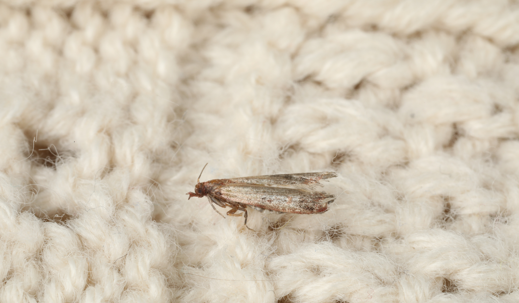
Adult clothes moths are small and usually buff or golden in color. Unlike many other moths, they are weak flyers and are not strongly attracted to lights. You may notice them fluttering close to a closet, drawer, rug, or stored textile rather than flying steadily through the room.
An adult moth near a closet deserves a closer look, but the adult is not the stage damaging your clothing. Inspect the surrounding fabrics for larval activity.
Check for Silk Webbing
Webbing clothes-moth larvae may leave patches of silk on the materials where they feed. These patches can collect fabric fibers, debris, and waste from the larvae.
Look closely beneath collars, cuffs, folds, seams, and the hidden portions of garments. Also check the underside of rugs and the areas beneath furniture, where activity can remain unnoticed.
Look for Portable Cases
Casemaking clothes-moth larvae carry small, cigar-shaped silken cases as they move and feed. These cases may incorporate fibers from the damaged material, making them blend into the fabric.
A small case attached to a garment, wall, rug, or closet surface is a useful clue. Do not assume that every case-shaped object is a clothes moth, since other small household pests may create similar-looking structures. Identification matters before treatment begins.
Pay Attention to Hidden Damage
Clothes-moth damage often appears in protected areas. Check beneath collars, inside cuffs, along seams, beneath rugs, behind stored boxes, and inside upholstered furniture crevices.
Clothing with food stains, perspiration, or other residue may be more vulnerable. Cleaning garments before storage makes them less attractive and removes material that larvae can feed on.
How to Identify Carpet Beetles in Melbourne Closets
Carpet beetles can be harder to trace because their larvae may hide in several areas beyond the closet itself. They can feed on lint, pet hair, dead insects, wool, silk, leather, fur, feathers, and other animal-derived materials.
The Melbourne guide to carpet-beetle larvae highlights several common hiding places, including baseboards, rug edges, closets, furniture, storage areas, and crevices where dust and fabric debris collect.
Look for Brown, Bristly Larvae
Carpet-beetle larvae often look tan, brown, or mottled. Their bodies may appear fuzzy because they have short hairs or bristles. Some species also have noticeable tufts near the rear of the body.
Their appearance differs from the smoother, lighter larvae associated with clothes moths. However, larvae are small and can be easy to miss against dark carpet, wood flooring, or dusty surfaces.
Check for Shed Skins
Carpet-beetle larvae molt as they grow and leave dry, shell-like skins behind. These cast skins may collect near baseboards, beneath rugs, inside closets, behind furniture, or close to damaged fabrics.
The UF/IFAS profile of black carpet beetles notes that cast larval skins are often visible on infested fabrics and may be mistaken for living larvae.
A pile of bristly shed skins without silk webbing points more strongly toward carpet beetles than clothes moths.
Inspect Window Sills
Adult carpet beetles are small and rounded. Some resemble tiny lady beetles in shape. Unlike clothes moths, adult carpet beetles may move toward sunlight and appear near windows, curtains, or window sills.
A few adult beetles near a window do not automatically confirm that larvae are damaging your closet. Adult carpet beetles can enter from outdoor sources. Inspect stored fabrics, rugs, baseboards, and lint-filled areas before assuming you have an active infestation.
Look Beyond Clothing
Carpet-beetle larvae may feed in places that appear unrelated to your closet. Check pet bedding, lint buildup, upholstered furniture, air vents, stored blankets, rug edges, natural-bristle brushes, and areas where dead insects collect.
Some carpet beetles may also appear near stored food, birdseed, or pet food. A thorough inspection should extend beyond a single damaged sweater or rug.
How Fabric Damage Differs
Clothes moths and carpet beetles can both damage valuable items, but the pattern may offer useful clues.
Scattered Holes May Point to Clothes Moths
Clothes-moth damage may appear as scattered holes, surface grazing, or irregular worn areas. Silk webbing, tubes, or portable cases strengthen the identification.
Look at the hidden side of the garment as well as the visible surface. Larvae often feed in protected areas where they are less likely to be disturbed.
Larger Damaged Areas May Point to Carpet Beetles
Carpet-beetle larvae may damage a larger section of one garment, rug, or upholstered surface. However, this distinction is not absolute.
The UC IPM guide to carpet beetles explains that fabric damage alone may not be enough to separate carpet-beetle activity from clothes-moth activity. Cast skins and the absence of webbing provide stronger clues.
Do Not Rely on One Sign
A single hole, adult insect, or shed skin does not tell the full story. Inspect the affected item, the shelf or floor beneath it, the surrounding baseboards, nearby rugs, and other stored textiles.
The goal is to identify where larvae are feeding, not simply where an adult insect happened to appear.
Where to Inspect Your Melbourne Closets
Both pests benefit from quiet, undisturbed storage areas. A closet inspection should cover the surfaces and crevices that routine cleaning may miss.
Closet Floors and Corners
Remove boxes, shoes, and storage bins from the floor. Check corners, carpet edges, baseboards, and gaps beneath shelving. Look for webbing, shed skins, larvae, lint buildup, and damaged fabric.
Stored Woolens and Natural-Fiber Items
Inspect sweaters, coats, blankets, scarves, rugs, felt items, fur-trimmed garments, feather-filled items, and wool-containing blends. Check seams, cuffs, collars, pockets, and folded areas closely.
Storage Containers
A sealed container only protects clothing when the contents were clean and pest-free before storage. Inspect boxes, bags, and bins for larvae, webbing, cast skins, or damaged items.
Move clean garments into airtight containers after the affected area has been inspected and cleaned.
Baseboards, Rug Edges, and Furniture
Carpet-beetle larvae may remain outside the closet and continue feeding in nearby areas. Inspect beneath rugs, along carpet edges, beneath furniture, behind dressers, and inside upholstered furniture crevices.
Windows, Screens, and Exterior Openings
Adult carpet beetles may enter through open windows or gaps around window screens. Check whether screens fit securely and whether windows close properly.
Clothes moths are more often associated with infested items already inside the home. Inspect secondhand garments, rugs, upholstered furniture, and stored textiles before moving them into a closet.
What to Do When You Find Fabric Pests
Step 1: Remove Everything From the Affected Area
Empty the closet, drawer, or storage bin carefully. Separate items with visible damage, webbing, larvae, or shed skins from items that appear unaffected.
Place affected garments in sealed bags while you decide whether they can be cleaned, treated, or discarded. This reduces the chance of moving larvae into another room.
Step 2: Inspect Every Vulnerable Item
Check all woolens, blankets, rugs, upholstered items, fur, feathers, and natural-fiber accessories stored nearby. Inspect folds, seams, pockets, cuffs, and hidden surfaces.
Do not return an item to the closet simply because the visible side looks intact.
Step 3: Vacuum Thoroughly
Vacuum closet floors, baseboards, cracks, shelf corners, rug edges, and nearby furniture. Remove lint, pet hair, dead insects, and debris that may provide food for carpet-beetle larvae.
Dispose of the vacuum contents promptly after cleaning an affected area. Eggs, larvae, or adult insects may remain inside the bag or canister.
Step 4: Clean Clothing Before Storage
Launder washable items according to their care labels. Take delicate garments, woolens, and other vulnerable items to a dry cleaner when washing may cause damage.
Cleaning removes residue and helps address larvae or eggs that may remain on the fabric. It also makes stored clothing less attractive to future pests.
Step 5: Store Clean Items in Airtight Containers
Use sturdy containers with secure lids for seasonal clothing, blankets, and other items that remain unused for long periods. Confirm that every garment is clean and dry before storage.
Do not place an untreated item into a sealed container with clean clothing.
Step 6: Monitor the Area
Continue inspecting closets, rugs, and baseboards after cleaning. Look for new holes, shed skins, larvae, webbing, or adult insects.
Pheromone traps designed for clothes moths can support monitoring, but they do not replace cleaning and inspection. Use traps intended for the specific pest you are monitoring.
Can You Use Mothballs in a Closet?
Mothballs should not be scattered loosely on closet shelves, floors, or open storage areas. They are pesticide products that release vapors.
The National Pesticide Information Center guidance on mothballs explains that these products are designed for use inside airtight containers, where the gas can build up without spreading into living spaces. If you can smell mothballs in the room, you are breathing the pesticide vapor.
Always read and follow the product label. Keep mothballs away from children, pets, food, and open living areas. Do not use them as a general repellent for insects, rodents, or wildlife.
How to Prevent Future Closet Damage
Clean Clothing Before Long-Term Storage
Wash or dry-clean clothing before packing it away for the season. Pay particular attention to woolens, blankets, and items with food residue, perspiration, or visible stains.
Vacuum Quiet Areas Regularly
Include closet corners, baseboards, rug edges, storage areas, air vents, and the spaces beneath furniture in your cleaning routine. These low-traffic areas can collect lint, pet hair, and debris that support carpet-beetle activity.
Use Airtight Storage Containers
Store clean seasonal clothing in sturdy containers with secure lids. Avoid relying on loosely folded plastic bags, cardboard boxes, or open baskets for long-term protection.
Inspect Secondhand Items
Check used clothing, rugs, furniture, and decorative textiles before bringing them into your home. Look along seams, folds, undersides, and hidden surfaces for larvae, shed skins, or webbing.
Repair Screens and Check Windows
Secure window screens and close gaps where adult carpet beetles may enter. This step will not address larvae already inside your home, but it can reduce new activity from outdoor sources.
Check Nearby Pet and Storage Areas
Inspect pet bedding, stored blankets, birdseed, dry pet food, lint-filled corners, and areas where dead insects collect. Carpet-beetle larvae can survive in less obvious places and return after a closet has been cleaned.
Do Clothes Moths or Carpet Beetles Affect Your Health?
Neither clothes moths nor carpet beetles bite people. The main concern is damage to fabrics and stored belongings.
However, carpet-beetle larvae and their shed skins may irritate some people. The bristly fragments, cast skins, or dust associated with an infestation can contribute to skin irritation or allergic reactions in sensitive individuals.
If you develop an unexplained rash or persistent symptoms, consult a healthcare professional. Pest identification can help clarify whether insects or another source may be contributing to the problem.
When to Request Professional Pest-Control Support
A small, isolated problem may improve after you clean affected items, vacuum thoroughly, and protect vulnerable fabrics. Professional support becomes more useful when activity continues or the source remains difficult to locate.
Consider requesting an inspection when:
- You continue finding larvae, webbing, cast skins, or new fabric damage after cleaning.
- Several closets, rooms, rugs, or upholstered items show signs of activity.
- You cannot determine whether clothes moths, carpet beetles, or another pest caused the damage.
- High-value garments, rugs, furniture, or stored textiles may be affected.
- Carpet-beetle larvae keep appearing along baseboards, beneath rugs, or behind furniture.
- You suspect hidden activity inside wall crevices, vents, storage spaces, or upholstered items.
Native Pest Management provides residential pest-control services in Melbourne. A professional inspection can help identify the pest, locate overlooked sources, and recommend the appropriate next step for your home.
Bottom Line: Inspect the Larvae and the Evidence They Leave Behind
Clothes moths and carpet beetles can damage similar materials, but the clues differ. Clothes-moth larvae may leave webbing, feeding tubes, or portable cases. Carpet-beetle larvae are bristly and may leave shed skins near damaged fabrics, baseboards, rugs, and furniture.
Start with a thorough inspection. Remove affected items, vacuum hidden corners, clean vulnerable garments, and place pest-free fabrics into airtight containers. Avoid using mothballs loosely inside closets or living spaces.
If new damage continues after cleaning or the source remains unclear, request a free quote from Native Pest Management to discuss the closets and storage areas in your Melbourne home.
Frequently Asked Questions
How Can I Tell if Clothes Moths or Carpet Beetles Damaged My Clothing?
Look for the evidence around the damaged item. Clothes-moth larvae may leave silk webbing, feeding tubes, or small portable cases. Carpet-beetle larvae often leave brown, bristly cast skins without webbing. Damage patterns can offer clues, but they do not always identify the pest on their own.
What Do Carpet-Beetle Larvae Look Like?
Carpet-beetle larvae are usually tan, brown, or mottled. They often have visible hairs or bristles and may look fuzzy. Shed larval skins may collect near baseboards, rugs, closets, furniture, or damaged fabrics.
What Do Clothes-Moth Larvae Look Like?
Clothes-moth larvae are generally small and light in color. Webbing clothes-moth larvae may leave silk patches or feeding tubes. Casemaking clothes-moth larvae carry small, cigar-shaped silken cases as they move and feed.
Why Did I Find Adult Carpet Beetles Near a Window?
Adult carpet beetles may move toward sunlight and appear near windows or window sills. A few adults do not automatically confirm an active fabric infestation. Inspect nearby closets, rugs, baseboards, lint-filled areas, and stored textiles for larvae or shed skins.
Can Carpet Beetles Damage More Than Carpets?
Yes. Carpet-beetle larvae can damage wool clothing, rugs, blankets, upholstered furniture, fur, feathers, leather, and other animal-derived materials. They may also feed on pet hair, lint, dead insects, and some stored products.
Do Clothes Moths Eat Cotton Clothing?
Clothes-moth larvae primarily target animal-derived fibers such as wool, fur, and feathers. They may also affect wool-containing blends. Fabrics with food residue, perspiration, or other stains can be more vulnerable.
Should I Put Mothballs Directly in My Closet?
No. Mothballs should only be used as directed on the label inside airtight containers. Do not scatter them loosely inside closets, drawers, attics, or living spaces where people and pets may breathe the vapors.
When Should I Call a Pest-Control Professional?
Request an inspection when new damage continues after cleaning, larvae or cast skins appear in several areas, high-value items may be affected, or you cannot identify the source with confidence.