What to Do About Pantry Pests in Doral
Opening a bag of rice or flour and finding small insects inside can be unsettling. The good news is that pantry pests are manageable when you locate the source and clean the affected storage area carefully.
These insects often arrive inside packaged food rather than entering through doors, windows, or gaps in the structure. Once they reach a pantry, they can spread to nearby dry goods through seams, folds, and small openings in packaging. This guide explains how to identify common pantry pests, what to discard, how to clean your shelves, and when to request pest-control support for your Doral home.
Key Takeaways
- Discard food with visible insects, larvae, webbing, or package damage.
- Inspect every nearby dry good, including rice, flour, cereal, pasta, spices, pet food, birdseed, and baking ingredients.
- Vacuum cabinet corners and shelf crevices to remove insects and spilled food.
- Store unaffected dry goods in tightly sealed glass, metal, or heavy-plastic containers.
- Do not spray insecticide inside food-storage cabinets.
- Request professional support when activity continues after cleaning or when you cannot locate the source.
What Are Pantry Pests?
Pantry pests are insects that infest stored food products. The most common groups include moths and beetles. They may affect rice, flour, cereal, pasta, cake mix, crackers, spices, nuts, dried fruit, pet food, birdseed, and other shelf-stable items.
The stored-food pest guide from UC IPM explains that these insects usually enter a home inside an infested food package. Their small size makes early activity easy to miss. You may not notice a problem until you see beetles crawling inside a container or moths flying near your pantry.
Finding pantry pests does not necessarily mean your kitchen is dirty. However, crumbs, spilled food, forgotten packages, and open containers can allow an isolated issue to spread across multiple shelves.
How to Identify Pantry Pests in Rice and Flour
Small Beetles in Dry Goods
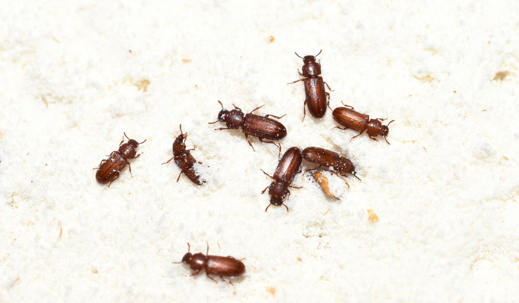
Several beetle species can infest stored foods. Flour beetles may appear in flour, cake mix, cereal, cornmeal, rice, pasta, crackers, cookies, spices, and dry pet food. Other beetles target whole grains and seeds.
Look closely at opened bags and containers. Small adult beetles may crawl through the product or collect near the corners of a package. Some grain pests leave small holes in individual kernels. You may also notice damaged packaging or insects moving across the shelf.
Webbing or Larvae Inside Packages
Indianmeal moths are among the most recognizable pantry pests. The adult moths may fly around kitchens and food-storage areas, but the larvae cause the damage inside packages.
Check for fine webbing inside bags, along package seams, or near the corners of boxes. You may also see small caterpillar-like larvae in cereal, rice, flour, nuts, dried fruit, birdseed, or pet food.
Moths Near the Pantry
A moth flying through your kitchen does not automatically prove that your rice or flour is infested. However, repeated activity near food-storage cabinets deserves attention.
Inspect the pantry before assuming that the visible package is the only source. Moth larvae can spread from one food item to another, and the original source may be a product that has remained untouched for weeks or months.
Damaged Packaging
Opened packages are especially vulnerable, but pantry pests can also move through thin cardboard, paper, cellophane, foil, and lightweight plastic. Check folds, seams, and small tears carefully.
A sealed outer package does not always mean that the contents are protected. Airtight containers made of sturdy materials offer a stronger barrier than the original store packaging.
Where Pantry Pests May Be Hiding
Rice and flour are common starting points for an inspection, but pantry pests can survive in many other products. Checking only the first package where you noticed insects may leave the actual source untouched.
Inspect Grains and Baking Ingredients
Start with flour, rice, cereal, pasta, oatmeal, cornmeal, baking mixes, crackers, cookies, dried beans, popcorn, and spices. Look inside opened packages and examine the exterior seams of unopened items.
Pay special attention to products that you rarely use. A bag of specialty flour or an old box of baking mix can remain undisturbed long enough for an infestation to develop unnoticed.
Check Nuts, Dried Fruit, and Snacks
Pantry pests are not limited to grain products. Inspect nuts, seeds, dried fruit, chocolate, candy, and shelf-stable snacks. A package stored on a different shelf may still be part of the same problem.
Do Not Forget Pet Food and Birdseed
Dry pet food, treats, and birdseed can also harbor pantry pests. Check storage containers in kitchens, garages, utility rooms, and patios. A bag stored outside your main pantry may allow insects to return after you clean your shelves.
Look Beyond the Kitchen
Stored-food insects may also appear in decorative items made with seeds, dried plants, or grains. Check seasonal decorations, potpourri, and dried-flower arrangements when pantry activity continues without an obvious food source.
What to Do When You Find Pantry Pests
Step 1: Remove Infested Food
Discard any product with live insects, larvae, webbing, or visible damage. Place the affected food in a sealed bag before removing it from your kitchen. Do not leave discarded packages in an indoor trash can.
Removing the source matters more than treating the visible insects. Pantry pests can continue developing inside food packages even when you clean the surrounding shelf.
Step 2: Inspect Every Susceptible Product
Check all dry goods stored near the affected item. The pantry-pest inspection guidance from the University of Minnesota Extension recommends examining every susceptible food because more than one package may be infested.
Use a flashlight to inspect the top layer of each product. For a closer look, pour the contents onto a clean baking sheet and check for movement, webbing, or insects.
Step 3: Vacuum Shelves, Corners, and Crevices
Remove food from the cabinet and vacuum the shelves carefully. Focus on cracks, corners, shelf-pin holes, and the narrow spaces where spilled food can collect.
Empty the vacuum or discard the vacuum bag after cleaning so insects do not remain inside your home. Once the cabinet is clear, wipe the surfaces with soap and water and let them dry completely before returning food to the shelves.
Step 4: Transfer Unaffected Food Into Airtight Containers
Place dry goods in containers made of glass, metal, or heavy plastic with tightly fitting lids. These containers help prevent insects from reaching new food and limit the spread of activity that may already be present.
Label each container with the product name and purchase date. Clear containers can make future inspections easier because you can spot changes without opening every item.
Step 5: Freeze Older Products When You Are Unsure
You may not need to discard every nearby food item. When an older product shows no visible signs but still raises concern, freezer storage can provide an additional safeguard.
The University of Minnesota Extension recommends placing uncertain food products in a freezer at 0°F for at least four days to kill insects and eggs. This option works best for products that can be frozen without affecting their quality.
Step 6: Monitor the Area
Continue checking the pantry after cleaning. You may still notice an occasional moth after discarding the original source. However, ongoing activity may signal that an infested package remains somewhere in your home.
A pheromone trap labeled for pantry pests can help monitor moth activity. A trap does not replace cleaning or food removal, but it can show whether insects remain active.
What Not to Do When Pantry Pests Appear
Do Not Spray Insecticide Inside Food Cabinets
Insecticides are not recommended for pantry-pest control inside food-storage cupboards. They do not eliminate insects protected inside packages, and spraying near food can create an avoidable safety concern.
Removing infested products and cleaning storage areas thoroughly addresses the source more effectively.
Do Not Keep Suspicious Food in Its Original Packaging
A folded bag, thin plastic liner, or cardboard box does not provide reliable protection. Move unaffected food into sturdy containers with tight-fitting lids.
Do Not Mix New Food With Older Products
Combining a new bag of rice or flour with an older supply can make it harder to trace the source of an infestation. Wash and dry containers before refilling them, then store new products separately.
Do Not Stop After Checking One Shelf
Pantry pests can spread beyond the cabinet where you first found them. Inspect dry goods in nearby shelves, kitchen drawers, garages, utility rooms, and other food-storage areas.
How to Prevent Pantry Pests in Your Doral Home
Buy Smaller Quantities of Seldom-Used Ingredients
Large packages may seem convenient, but products that remain open for months create more opportunities for pantry pests to go unnoticed. Buy smaller quantities of specialty flour, grains, spices, and baking ingredients when you use them infrequently.
Inspect Packaging Before Storage
Check boxes and bags for tears, holes, or insects before placing new groceries in your pantry. Pay closer attention to bulk products and packages with damaged seams.
Use Airtight Containers From the Start
Transfer rice, flour, cereal, pasta, and other dry goods into sealed containers soon after purchase. Sturdy containers protect food more effectively than paper bags and lightweight packaging.
Keep Shelves Clean and Organized
Clean spilled food promptly and rotate older ingredients toward the front of the shelf. An organized pantry makes it easier to notice forgotten products, inspect containers, and identify new signs early.
Check Food Stored Outside the Pantry
Remember to inspect pet food, birdseed, treats, and dry goods kept in garages or utility spaces. An overlooked bag outside the kitchen can allow pantry pests to return after you clean the main cabinet.
When to Request Professional Pest-Control Support
A small, isolated infestation may improve after you remove the affected food, inspect nearby packages, and clean the storage area thoroughly. Professional support becomes more useful when the source is difficult to locate or the activity returns.
Consider requesting an inspection when:
- You continue seeing moths or beetles after cleaning the pantry.
- Multiple cabinets or rooms show signs of activity.
- You cannot identify the affected food source.
- Insects appear outside the kitchen without a clear connection to stored food.
- The infestation returns after you transfer dry goods into airtight containers.
Native Pest Management provides residential pest-control services in Doral. A professional can help determine whether the insects are pantry pests, locate overlooked sources, and recommend the appropriate next step for your home.
Remove the Source Before Pantry Pests Spread
Finding insects in rice or flour does not require panic, but it does call for a thorough inspection. Start by discarding affected products, checking every nearby dry good, vacuuming cabinet corners, and storing unaffected food in airtight containers.
Avoid spraying insecticide inside food-storage cabinets. The most important step is locating and removing the source.
If pantry pests continue appearing after you clean your shelves and protect your dry goods, review Native Pest Management’s pantry-pest information or request a free quote for your Doral home.
Frequently Asked Questions About Pantry Pests
Why Are There Bugs in My Rice or Flour?
Pantry pests often arrive inside packaged food. They may also spread from an infested product to nearby dry goods through seams, folds, and small gaps in packaging.
Should I Throw Away Rice or Flour With Pantry Pests?
Yes. Discard food with visible insects, larvae, webbing, or package damage. Seal the affected product in a bag before removing it from your kitchen.
Can Pantry Pests Get Into Unopened Packages?
Yes. Some pantry pests can reach food through thin cardboard, paper, lightweight plastic, foil, or package seams. Storing dry goods in tightly sealed glass, metal, or heavy-plastic containers provides stronger protection.
Can I Spray My Pantry Shelves With Insecticide?
Insecticides are not recommended for controlling pantry pests inside food cupboards. They do not eliminate insects hidden inside packages and may create an unnecessary risk near food-storage areas.
How Should I Clean My Pantry After Finding Bugs?
Discard infested items, remove dry goods from the cabinet, and vacuum shelves, cracks, and corners. Empty the vacuum or discard the bag afterward. Wipe shelves with soap and water, allow them to dry, and return unaffected food in tightly sealed containers.
Can I Keep Food That Was Stored Near an Infested Package?
Inspect nearby products carefully. Food stored in an airtight container may still be usable if it shows no signs of infestation. Older products that remain uncertain can be frozen at 0°F for at least four days when appropriate for the food.
When Should I Call a Pest-Control Professional?
Request support when activity continues after cleaning, several storage areas are affected, the source remains unclear, or insects return after you move dry goods into airtight containers.