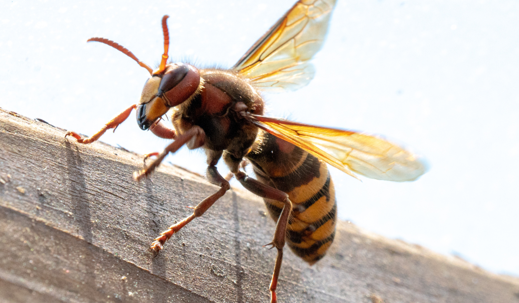
Hornets vs. Wasps in Melbourne Backyards
Seeing a stinging insect near your patio, roofline, or landscaping can raise an immediate question: is it a hornet or a wasp? The answer matters because different species build nests in different places and do not all respond the same way when people approach. Some wasps live alone and rarely sting unless handled. Others form colonies and may defend a nest near a doorway, play area, or outdoor gathering space.
Hornets belong to the broader wasp family, but the practical distinction for homeowners goes beyond the name. Nest shape, nest location, insect behavior, and the amount of activity around a fixed area can help you decide whether to leave the insects alone, monitor the situation, or request professional pest control.
Key Takeaways: Hornets vs. Wasps
- Hornets are wasps, but the word “wasp” also covers paper wasps, yellowjackets, mud daubers, cicada killers, and many other species.
- Nest style is one of the most useful identification clues. Paper wasps build exposed combs, while baldfaced hornets build enclosed aerial nests and yellowjackets often nest underground or inside sheltered spaces.
- Social wasps can defend their colonies when disturbed. Solitary wasps usually pose a lower risk unless they are handled or trapped against the skin.
- A nest near a doorway, walkway, patio, lawn, or children’s play area deserves closer attention because routine activity can bring people too close to the colony.
- Do not disturb or seal an active nest opening before the insects have been identified. A professional inspection can determine the safest next step.
What Is the Difference Between a Hornet and a Wasp?
Hornets fall within the wasp family. However, not every wasp is a hornet. Florida homeowners may encounter several kinds of wasps, including paper wasps, yellowjackets, baldfaced hornets, mud daubers, and cicada killers. Each group behaves differently and uses different nesting sites.
The Florida guide to stinging insects and nest identification explains that hornets, yellowjackets, paper wasps, mud daubers, and cicada killers are all wasps. Some live in organized colonies. Others are solitary and build individual nests.
For homeowners, the most useful question is not simply whether the insect is a hornet or a wasp. The better question is whether a colony has formed close to an area where people regularly walk, work, sit, or play.
Social Wasps vs. Solitary Wasps
Social wasps live in colonies. Paper wasps, yellowjackets, and bald-faced hornets fall into this category. Their nests can grow as the season progresses, and workers may defend the colony when someone approaches too closely or disturbs the structure.
Solitary wasps do not maintain a colony with a worker population. Mud daubers and cicada killers are common examples. They may look intimidating, but they usually present a lower risk when left undisturbed.
This distinction matters because a visible wasp does not always signal an urgent problem. A recurring stream of insects entering the same opening, an active nest above a doorway, or a ground nest near a lawn or garden path deserves more attention than a single wasp moving through the yard.
How to Identify Common Wasps and Hornets Around Your Florida Home
Paper Wasps
Paper wasps often build open, umbrella-shaped nests beneath eaves, porch ceilings, railings, outdoor furniture, and other sheltered surfaces. Their nests contain visible hexagonal cells without a full exterior envelope.
Paper wasps can benefit gardens because they prey on insects such as caterpillars. However, a colony near an entrance, patio, or frequently used walkway can create a stinging concern. A nest that stays out of the way may not require immediate action, while one close to daily activity needs closer evaluation.
Baldfaced Hornets
Baldfaced hornets are black-and-white social wasps that build enclosed aerial nests. These gray paper nests may appear in trees, shrubs, or on the exterior of a building. The nest can become easier to notice as it grows during the season.
The Florida profile of yellowjackets and baldfaced hornets describes baldfaced hornet nests as aerial structures that may reach a foot or more in diameter. Because these colonies can defend the nest, keep your distance and avoid disturbing branches, shrubs, or nearby surfaces.
Yellowjackets
Yellowjackets are social wasps that often build enclosed nests underground. They may also use tree cavities, sheltered openings, or spaces around structures. Ground nests can be difficult to notice until yardwork, mowing, or foot traffic brings someone close to the entrance.
Watch for insects repeatedly entering and leaving a small opening in the lawn, garden bed, wall, or exterior siding. Avoid approaching the opening or attempting to block it. An active access point needs inspection before any repair work begins.
Mud Daubers
Mud daubers are solitary wasps that build small mud cells or tubes beneath eaves, porch roofs, and other covered areas. Their nests look different from exposed paper-wasp combs and enclosed hornet nests.
Mud daubers tend to be less defensive because they do not maintain a large social colony. Still, identification matters before you decide how to respond, especially when several species are active around the same property.
Cicada Killers
Cicada killers are large solitary wasps that dig burrows in the ground. Their size can make them alarming, but their nesting behavior differs from the concealed colony activity associated with yellowjackets.
A professional can help identify the insect when the nest type or behavior remains unclear. This becomes especially useful when activity appears close to a sidewalk, play area, or regularly used part of the yard.
Where Hornet and Wasp Activity Appears Around Homes
Eaves, Porches, and Rooflines
Sheltered exterior surfaces give paper wasps a place to attach their open nests. Check beneath eaves, porch ceilings, railings, outdoor furniture, and covered entryways from a safe distance. Early visibility can help you identify a nest before it becomes a recurring concern.
Trees, Shrubs, and Landscaping
Enclosed aerial nests may appear in trees or dense shrubs. A nest can remain unnoticed until landscaping work, falling leaves, or routine yard activity reveals it. Avoid trimming or shaking vegetation when you notice concentrated insect activity in one area.
Lawns and Garden Beds
Ground-nesting yellowjackets can establish colonies in lawns, garden beds, and other soil areas. The entrance may look small compared with the nest below ground. Repeated insect movement around a fixed opening is a stronger clue than the appearance of one insect flying over the grass.
Wall Voids and Structural Openings
Wasps may enter gaps around soffits, siding, vents, rooflines, or other exterior openings. A steady stream of insects moving through the same gap can suggest a hidden nest inside a protected space.
Do not seal an active entry point before the colony has been identified and addressed. Closing the visible opening too soon can create a more complicated problem if insects remain active inside the structure.
Why Hornet and Wasp Problems Develop
Sheltered Nesting Sites
Eaves, wall gaps, dense landscaping, and undisturbed soil provide protected places for nest development. Florida’s warm climate can keep outdoor activity noticeable for extended periods, especially around properties with gardens, patios, and mature landscaping.
Outdoor Food Sources
Some social wasps forage around uncovered trash, sugary drinks, food spills, pet food, and outdoor dining areas. Activity can become more noticeable around patios and garbage storage areas when food residue remains accessible.
Use tightly closed trash containers, clean spills after outdoor meals, and rinse recycling containers before storage. These routine steps can reduce foraging activity without bringing you close to an active nest.
Seasonal Colony Growth
Social-wasp colonies can grow over the course of a season. A small nest that attracts little attention early on may become harder to ignore later, particularly when it sits near an entrance, walkway, or lawn.
Regular visual checks around frequently used outdoor spaces can help you notice activity before accidental contact becomes more likely.
Health Risks From Hornet and Wasp Stings
Hornet and wasp stings are often painful. The level of risk depends on the number of stings, the location of the sting, and the person’s reaction to the venom. Social wasps can sting more than once, which increases the concern when someone disturbs a colony.
Most stings cause localized pain, redness, itching, or swelling. Some people experience a severe allergic reaction that requires immediate medical care. The medical guidance for insect bites and stings advises calling emergency services when symptoms include trouble breathing, wheezing, facial or mouth swelling, throat tightness, difficulty swallowing, or weakness.
Keep children and pets away from an active nest. Stay calm when a single wasp flies nearby and avoid swatting at it. The sting-prevention guidance for outdoor activity recommends moving carefully and avoiding sudden reactions that may provoke a sting.
Do Hornets and Wasps Damage Homes?
Hornets and wasps usually create a stinging risk rather than a structural-damage problem. However, a hidden nest inside a wall void, soffit, or other sheltered space can complicate removal and may require professional assessment.
Correct identification matters before any work begins. Bees, wasps, and hornets do not require the same response. A bee colony may leave wax comb or honey inside a structure, while a paper-wasp nest or yellowjacket colony presents a different set of conditions. Avoid assuming that every flying insect entering a wall gap belongs to the same group.
This guide to identifying bees and wasps explains several visible differences that can help homeowners describe the activity more accurately when requesting service.
How to Reduce Wasp Activity Around Your Property
Inspect High-Traffic Areas From a Safe Distance
Check porch ceilings, eaves, outdoor furniture, shrubs, play areas, and walkways for visible nests or repeated insect movement. Do not approach a nest closely to take a photo or confirm the species.
Keep Outdoor Food and Trash Covered
Use sealed trash bins and clean up food residue after outdoor meals. Pay attention to sugary spills, recycling containers, and pet-food bowls left outside. These sources can draw foraging wasps into the spaces where people gather.
Repair Gaps After Active Nests Have Been Addressed
Cracks around siding, soffits, vents, and rooflines can provide access to sheltered spaces. Repairing gaps can support prevention, but timing matters. Have an active entry point inspected before sealing it.
Avoid Disturbing Nests
Do not strike a nest, spray it with a hose, or attempt to knock it down. Avoid mowing, trimming shrubs, or moving outdoor items near concentrated activity until you know where the nest is located.
When to Call a Professional for Hornet or Wasp Control
Professional support becomes the safer choice when a nest sits near a doorway, walkway, patio, play area, or frequently used section of the yard. It also makes sense when the nest is elevated, hidden underground, inside a structural void, or difficult to identify from a safe distance.
Homeowners should also request help when they notice repeated insect traffic entering the same opening or when someone in the household has a known sensitivity to insect stings.
Native Pest Management offers professional wasp control for Florida homes and businesses. The company’s Florida paper-wasp guidance recommends professional support when nests are difficult to reach or located near the areas where families spend time.
What a Professional Inspection Should Evaluate
A professional inspection should identify the species when possible, locate the nest, assess activity around entry points, and determine whether the insects are using an exterior surface, the ground, landscaping, or a protected structural space.
The right response depends on the colony. A paper-wasp nest beneath an eave requires a different approach from a yellowjacket colony beneath a lawn or an enclosed nest in a tree.
Hornets Are Wasps, but Nest Type Matters Most
Hornets belong to the wasp family, but wasps vary widely in appearance, nesting habits, and behavior. Paper wasps build exposed combs. Baldfaced hornets build enclosed aerial nests. Yellowjackets frequently use underground or sheltered sites. Mud daubers and cicada killers live alone and tend to present a lower risk when left undisturbed.
Focus on the practical signs: where the insects gather, whether they repeatedly enter the same opening, and how close the activity sits to the spaces your household uses. Do not disturb an active nest or seal an entry point before the colony has been assessed.
Review Native Pest Management’s Florida service areas or request a free quote to discuss stinging-insect activity around your property.
Frequently Asked Questions
Are Hornets a Type of Wasp?
Yes. Hornets belong to the broader wasp family. However, the word “wasp” covers many insects with different nesting habits and behaviors, including paper wasps, yellowjackets, mud daubers, and cicada killers.
How Can I Tell a Hornet Nest From a Paper-Wasp Nest?
A baldfaced hornet nest usually looks like an enclosed gray paper structure attached to a tree, shrub, or building surface. A paper-wasp nest has an open comb with visible cells and often hangs beneath an eave, porch ceiling, or sheltered outdoor surface.
Do All Wasps Sting?
Many wasps can sting, but the likelihood of a sting varies by species and situation. Social wasps may defend a colony when disturbed. Solitary wasps such as mud daubers tend to present a lower risk unless they are touched or trapped against the skin.
What Should I Do if I See Wasps Entering a Wall?
Keep your distance and avoid sealing the opening. Repeated activity around one gap may indicate a hidden nest inside a protected space. A professional inspection can identify the activity and recommend the next step.
Should I Remove a Ground Nest Myself?
No. A concealed ground nest can be difficult to assess safely and may be disturbed by nearby movement. Keep people and pets away from the area and request professional support.
When Does a Wasp Nest Require Professional Attention?
Request professional help when a nest is close to a doorway, walkway, patio, play area, or lawn; hidden inside a structure; elevated beyond safe reach; or difficult to identify without approaching it. Professional support is also advisable when someone in the household has a known sensitivity to insect stings.