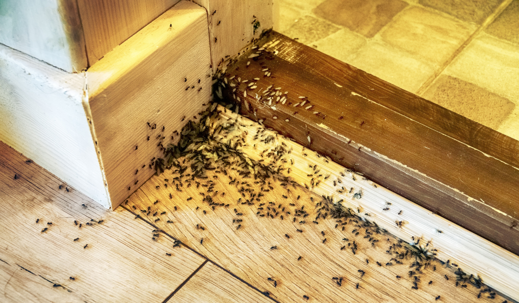
How to Find an Ant Nest Inside a Tallahassee Home
Finding ants in your kitchen or bathroom is frustrating enough. Finding the nest they came from is harder, especially in Tallahassee, where several species are capable of hiding colonies in walls, under floors, and behind cabinets for months before the problem becomes obvious.
Knowing how to find an ant nest indoors helps you act on the right area instead of treating the wrong one.
Key Takeaways
- Different ant species hide their nests in different locations inside a home, so identifying the ant you have is the first step to finding where it lives.
- Ant trails are one of the most reliable clues. Following them back toward their source often points you to the nest or the wall void where it's concealed.
- Moisture is a consistent factor across species. Leaky pipes, damp wood, and humid crawl spaces attract nesting ants more than food does in many cases.
- Visible ants are usually workers, not the colony. Treating foragers without locating the nest rarely resolves the infestation.
How to Identify Which Ant Is Nesting in Your Tallahassee Home
Tallahassee sits in a warm, humid climate that supports a wider range of ant species than many parts of the country. Year-round ant pressure is common here, and different species show up in different parts of the house depending on what they need: food, moisture, or shelter from the heat.
Common Ants That Nest Indoors in Tallahassee
Ghost ants are among the most frequently reported indoor species in North Florida. They have dark heads and nearly translucent bodies, and they're easy to miss until there are enough of them trailing across a countertop or bathroom vanity. When crushed, they release a faint coconut-like odor. Ghost ants prefer humid areas and typically nest in wall voids, behind baseboards, and occasionally inside potted plants.
Florida carpenter ants are much larger, orange and black, up to half an inch long. They don't eat wood, but they excavate it to build nests. In Tallahassee, carpenter ants are a particular concern near the canopy oak trees that surround many neighborhoods, since damp or decayed wood around the exterior of a home gives them an easy starting point.
Ghost ants, carpenter ants, and sugar ants are the species most commonly found nesting indoors in Florida homes. Fire ants and bigheaded ants tend to build their colonies outside, but they do enter homes through cracks and gaps in the foundation.
Where to Look for Signs of Ant Activity Inside Your Home
Before you can find the nest, you need to locate where ants are most active. Ants in kitchens often trail near sinks, under cabinets, and around food sources. In bathrooms, ghost ants and pharaoh ants frequently appear near drains, leaky pipes, and baseboards.
If ants are disappearing into outlets, curtain rods, or behind cabinetry, that's a sign the colony may be established inside wall voids, a pattern associated with species that form multiple nests throughout a structure.
How Ant Trails Help You Find the Nest
Worker ants follow pheromone trails between the nest and a food or water source. Watching where those trails begin, not where they end, is more useful for locating a nest. If you follow a trail back toward a wall crack, a gap beneath a baseboard, or a void around plumbing, that's the direction the nest is most likely in.
Nighttime observation is particularly effective for carpenter ants, which are most active after dark and forage continuously through Florida's warmer months. A flashlight inspection along baseboards, countertops, and under appliances after 10 p.m. often reveals movement that's invisible during the day.
Why Ant Nests Develop Inside Tallahassee Homes
Ants don't nest indoors randomly. They need a reason to stay, usually moisture, a food source, or a sheltered cavity that maintains a stable temperature. Tallahassee's humidity creates the kind of conditions that make homes appealing nesting sites regardless of how clean they're kept.
Moisture Problems That Attract Nesting Ants
Leaky pipes under sinks, condensation around HVAC components, and damp wood near window frames or roof eaves are among the most consistent attractants for indoor nesting. Moisture issues and rotting wood often attract carpenter ants and help them expand their nests faster. Ghost ants respond similarly. Wall voids near bathrooms or kitchen plumbing are common nesting sites for this species.
Fixing a slow pipe leak or improving ventilation in a crawl space won't necessarily eliminate an existing colony, but it removes one of the main reasons ants stay once they're inside.
Food Sources That Sustain Indoor Ant Colonies
Sugary spills, crumbs, grease residue near the stove, and exposed pet food are reliable food sources for ants nesting indoors. Ghost ants favor sweets, while carpenter ants tend to forage for protein and sugars both. Keeping countertops clean, food in sealed containers, and trash bins lidded cuts off the supply that keeps foragers returning and keeps scouts from signaling a nest to relocate closer.
How Ants Move Into and Through Your Home
Carpenter ants frequently use overhanging branches or utility lines as pathways from outdoor colonies to the roofline. Once inside, satellite nests can form in wall voids or ceiling cavities some distance from the main outdoor colony. They access your home by trailing along outer wires or cables that lead indoors, or by using trees that touch your roof as a bridge.
Ghost ants take a different route. Their colonies split under pressure, which means a single nest treated with a repellent spray often becomes two nests somewhere else in the same wall. That's why DIY sprays often appear to work for a few days before the problem resurfaces.
Structural Features That Hide Ant Nests
Older Tallahassee homes, particularly those in midtown neighborhoods with aging crawl spaces or wood framing, offer more entry points and nesting cavities than newer construction.
Wall voids around plumbing, gaps at the base of exterior doors, and cracks in the foundation near mulch beds are all common entry routes. Once ants are inside a wall void, they're difficult to detect without a targeted inspection.
Signs of an Ant Nest Inside Your Home
The presence of ants is a sign. The location and character of what you're seeing helps determine whether there's a nest inside the structure or just foragers coming in from outside.
What Carpenter Ant Activity Looks Like
Frass is one of the clearest signs of an indoor carpenter ant nest. It's a mix of coarse wood shavings, insect body parts, and debris.
It looks like pencil shavings mixed with dark specks and typically collects below kick-out holes in walls, baseboards, or ceilings. Seeing winged carpenter ants emerging indoors, especially near windows, almost always points to an established indoor nest rather than a stray outdoor event.
A faint rustling or scraping sound inside walls, particularly at night, can also indicate carpenter ants excavating wood to expand a nest.
What Ghost Ant Activity Looks Like
Ghost ant trails are thin and easy to miss. Worker ants slip through tiny crevices and carry food back to nests hidden in wall voids, behind cabinets, and occasionally inside electrical outlets. If you see repeated trailing near a specific section of baseboard or behind a specific cabinet, that area is worth examining more closely for gaps or cracks leading into a void.
Because ghost ant colonies form multiple nests and split when disturbed, what looks like a contained infestation in the kitchen may involve several nesting sites across different parts of the home.
When Forager Counts Signal a Larger Problem
A single ant near a doorway may be a scout from an outdoor colony. But if you're seeing five or more large ants indoors over multiple nights, or a persistent trail that reappears after cleaning, the colony is likely already established inside the structure. At that point, surface-level treatment alone is unlikely to resolve the problem.
How to Find an Ant Nest Indoors: A Practical Inspection Approach
Locating an ant nest inside a home requires a methodical approach rather than a quick check of obvious spots. The nest is almost never where you first see the ants.
Start With the Trail, Not the Ants
When you spot a trail, resist the urge to spray it. Instead, follow the ants moving away from the food source. That direction leads toward the nest, or at least toward the wall void where the colony is hidden. Note where they disappear: into a crack at the baseboard, a gap around a pipe under the sink, or a hole near an outlet.
Check High-Moisture Areas First
Kitchens and bathrooms are the most common sites for indoor ant nests because moisture is consistent and accessible. Look under sinks for soft or discolored wood around supply lines, and check behind appliances where condensation builds up. Carpenter ants often establish satellite nests in these areas even when the main colony is outdoors.
Inspect Structural Wood in Crawl Spaces and Attics
If you're not finding an obvious nest location in the living areas of your home, check any accessible crawl space or attic. Soft, spongy wood, especially near roof eaves, around plumbing penetrations, or near any area with past water damage, is a common nesting site for carpenter ants. Look for frass accumulation below any wood that sounds hollow when tapped.
Check Exterior Entry Points and the Surrounding Yard
The indoor nest may be a satellite of a larger colony that started outside. Tracking ant trails to locate nests and using species-specific baits and treatments is a more reliable approach than treating the interior alone. Look for ant activity along the foundation, in mulch beds directly against the exterior wall, and near any tree stumps or decayed wood in the yard.
Professional Pest Control for Ant Nests in Tallahassee
Identifying which species you're dealing with changes everything about how to approach the nest. Ghost ants require baiting strategies that account for colony splitting.
Carpenter ants require locating the wood they're nesting in, often a job that involves tapping walls, inspecting crawl spaces, and tracking nighttime trails. A general spray treatment applied to foragers doesn't reach the queen or the workers protecting her.
Why Species Identification Matters for Nest Treatment
Repellent sprays often cause ghost ant colonies to split and relocate, expanding the infestation instead of eliminating it. Non-repellent baits that foragers carry back to the nest are more effective, but the right bait depends on the species and the season, since ant food preferences can shift with temperature, brooding conditions, and rainfall.
Carpenter ant treatment targets the nest directly, which means finding it first. A professional inspection that includes crawl space access, wall void checks, and nighttime tracking gives a much clearer picture of where the colony is concentrated.
What a Professional Inspection Covers
A trained technician will look at moisture conditions, structural access points, and trail patterns to piece together where a nest is most likely located.
They can distinguish between carpenter ant frass and drywood termite frass, two signs that look similar but require different responses. They can also assess whether indoor activity is coming from a satellite nest or a main colony, which determines the appropriate treatment approach.
What to Expect From a Targeted Ant Control Plan
An effective plan combines nest location with baiting or direct treatment, followed by sealing the entry points ants used to get inside. Follow-up visits confirm that the colony has been eliminated rather than relocated.
Reducing moisture issues and removing exterior conditions that support ant foraging, such as overgrown vegetation, mulch against the foundation, and wood debris near the structure, helps prevent a new colony from establishing once the current one is addressed.
Native Pest Management serves homeowners across Tallahassee with targeted inspections and ant control plans based on the specific species and conditions found in each home. If you've spotted ant activity indoors and can't locate the source, contact Native Pest Management to schedule an inspection.
Frequently Asked Questions
How Do I Know if the Nest Is Inside My Home or Outside?
If ants are trailing from a wall void, baseboard gap, or plumbing penetration rather than from a door or window, the nest is likely inside the structure. Persistent trail activity that reappears after cleaning, or ants seen repeatedly in the same interior location over multiple days, also suggests an indoor colony rather than outdoor foragers.
What Is Frass and Why Does It Matter?
Frass is the debris carpenter ants push out of excavated wood, a mix of coarse wood shavings, insect body parts, and material from the nest. Finding small piles of it near baseboards, walls, or ceilings is one of the clearest signs of an active indoor carpenter ant nest.
Why Do Ants Keep Coming Back After I Spray Them?
Most over-the-counter sprays kill visible foragers without reaching the queen or the workers protecting the colony. Ghost ant colonies will also split and relocate when threatened with repellent treatments, which can make the infestation appear to spread rather than shrink. Baiting strategies that target the colony directly tend to produce more lasting results.
When Should I Call a Pest Control Professional?
If you've seen repeated ant activity indoors over more than a week, noticed frass or rustling sounds in walls, or treated the problem without lasting results, a professional inspection is the practical next step. Species identification and nest location are both difficult without the right tools and training, and treating the wrong species with the wrong method extends the problem rather than solving it.