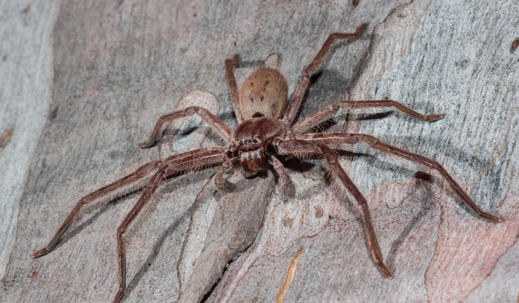
Huntsman Spiders in Florida: How to Identify Them and Keep Them Out
Seeing a large spider run across your wall can be scary. In Florida, the huntsman spider is one of the largest spiders you may see. Its long legs and wide leg span can make it look intimidating.
Huntsman spiders are becoming more common in Florida, especially in warm South Florida. Because they move quickly and look different from other spiders, people often mistake them for dangerous species. Regardless of species, most homeowners do not want large spiders inside their homes.
If you’re dealing with a huntsman spider or any other large Florida spider, this guide will help you identify it and explain when it’s time to contact Native Pest Management for professional spider control services to keep your home protected.
Key Takeaways
- Huntsman spiders in Florida are large arachnids with a flattened body, long legs, and a wide leg span that can reach up to five inches.
- Huntsman spiders do not build webs to catch prey. Instead, they hunt insects, such as cockroaches, inside and around homes.
- Huntsman spiders are often confused with wolf spiders, brown recluse spiders, black widows, and banana spiders.
- Sealing cracks and crevices, reducing clutter in garages and attics, and lowering pest populations help keep huntsman spiders out of Florida homes.
How to identify huntsman spiders in Florida
The huntsman spider belongs to the Sparassidae family. These spiders are often called giant crab spiders because of how their legs extend outward. The most common species in Florida is Heteropoda venatoria, also known as the pantropical huntsman spider. It originated in Asia and Australia but now thrives in Florida’s humid climate.
Unlike many spiders that build webs to trap prey, huntsman spiders actively hunt. They feed on insects such as cockroaches and sometimes on small reptiles. That hunting behavior is one reason you may see them moving across floors or walls.
Body shape and flattened appearance
One key feature of a huntsman spider is its flattened body. This flat body allows it to fit into tight crevices around your home.
It can hide behind picture frames, under tree bark, or inside small wall gaps. Compared to wolf spiders, huntsman spiders look flatter and less bulky.
Long legs and wide leg span
Huntsman spiders have long legs that stretch out to the sides. Their longer legs give them a crab-like stance.
An adult huntsman spider can stretch up to five inches across. Even if the body is not very large, the wide leg span makes it look much bigger.
Color and markings
Most huntsman spiders in Florida are light brown or tan. Some may have faint black spots or darker bands on their legs.
They do not have the clear violin-shaped marking seen on a brown recluse spider. Remembering this detail can help you differentiate huntsman spiders from any other common spiders that look like huntsman spiders.
Movement and behavior
Huntsman spiders do not build webs to trap insects. They may create a small web to protect an egg sac, but they do not spin webs in corners like common house spiders.
Instead, they move quickly. If you see a large spider dart sideways across a wall or ceiling, it may be a huntsman spider. Their speed often surprises homeowners.
Common Florida lookalikes vs. huntsman spiders
Florida is home to many spider species, and several look similar to a huntsman spider. As temperatures begin to shift and humidity remains high, spiders often become more active in September, increasing the chances that you’ll spot one inside or around your home.
Wolf spiders
Wolf spiders are another large spider found in Florida homes. Like huntsman spiders, they do not build webs to hunt.
However, wolf spiders have thicker bodies and shorter legs compared to their body size. They also look hairier and usually stay closer to the ground.
Brown recluse spider
The brown recluse spider is often confused with other brown spiders. A brown recluse has a clear violin-shaped marking on its back.
Brown recluse spiders are not common in most parts of Florida.
Are huntsman spiders dangerous? In most cases, no. Huntsman spider bites are rare and usually happen only when someone presses the spider against their skin. Most bites cause mild pain and redness. Serious allergic reactions are uncommon.
Black widow
A black widow looks very different from a huntsman spider. Black widows are shiny black and have a red hourglass shape on the underside of the abdomen.
They prefer dark hiding spots such as garages, sheds, and woodpiles. Unlike huntsman spiders, black widows build messy webs and stay close to them.
Banana spider
The banana spider is common outdoors in Florida yards. It builds large, circular webs between trees or structures.
Banana spiders have bright yellow markings and a longer abdomen. Since huntsman spiders do not build webs to catch prey, a large web in your yard likely belongs to a banana spider, not a huntsman.
How to keep huntsman spiders out
Because Florida stays warm most of the year, huntsman spiders remain active in every season. They often enter Florida homes in search of food or shelter.
Entry through cracks and crevices
Their flattened bodies allow them to slip into small cracks and crevices. Check around windows, doors, and your home’s foundation for openings.
Seal gaps with caulk or weatherstripping to prevent entry. Pay close attention to spaces around plumbing lines and cables.
Garages and attics
Garages and attics provide dark hiding spots. Keep garages organized and avoid stacking cardboard boxes directly against walls.
In attics, reduce clutter and make sure vents have tight screens.
Landscaping and outdoor hiding spots
Outdoors, huntsman spiders may hide under tree bark, in leaf litter, or around woodpiles. These areas create an ideal spider habitat close to your home.
Keep landscaping trimmed to reduce hiding spots near your home. Store woodpiles away from exterior walls. Remove yard debris to make your property less attractive to spiders and other pests.
Reducing prey insects
Huntsman spiders feed on cockroaches and other insects. When insect activity is high around your home, they are more likely to move indoors.
A professional pest control service can reduce insect populations, including cockroaches and ants, that attract spiders. When insect activity drops, spiders are less likely to settle inside.
With ongoing spider control and treatment plans tailored to Florida homes, we help keep unwanted pests out year-round.
Schedule a Florida spider inspection and exclusion quote
If you see a huntsman spider inside your home, you do not have to guess what it is. Florida homeowners often mistake one spider for another.
A professional inspection confirms the spider type and finds hiding spots and entry points.
Our trained technicians inspect your property, identify spider hiding areas, and recommend clear next steps. If you are worried about spiders, cockroaches, or other pests, schedule an inspection and get an exclusion quote.
Making the right huntsman spider prevention plan for your Florida home
A huntsman spider sighting can be alarming, but it doesn’t have to become an ongoing issue. These spiders typically enter Florida homes while searching for insects, so prevention starts with proper exclusion and pest control.
By sealing cracks, removing outdoor hiding spots, and reducing pest populations, you make your home far less attractive to spiders and other pests.
If you would rather have an expert handle it, our team at Native Pest Management offers detailed inspections and customized pest management programs tailored to Florida homeowners.
Contact us today or request a free quote and take the first step toward a spider-free home you can feel confident in.
FAQs:
Are huntsman spiders dangerous to humans?
Huntsman spiders are not considered highly dangerous. Huntsman spider bites are rare and usually cause mild pain or redness. Serious allergic reactions are uncommon.
Do huntsman spiders build webs inside homes?
No. Huntsman spiders do not build webs to trap prey. They may create a small web to protect an egg sac, but they actively hunt insects rather than wait in a web.
Why are huntsman spiders common in Florida?
Florida’s warm, humid, subtropical climate provides ideal conditions. With plenty of insects like cockroaches available as food, huntsman spiders can thrive in many parts of the state.