How to Identify Ghost Ants vs. Crazy Ants in Your Florida Home
If you’re seeing tiny ants crawling across your countertops or scurrying along the baseboards, you’re not alone. Homeowners across South Florida deal with ant problems year-round thanks to the warmth and humidity that help colonies thrive.
Two species of ants that commonly invade homes here are ghost ants and crazy ants. They might look similar at first glance, but knowing how to tell them apart is key to choosing the proper control strategy.
In this article, we’ll explain how to identify them in your Florida home and what steps you can take to get rid of them effectively.
Key Takeaways
- Ghost ants are small with pale legs and dark heads, while crazy ants look reddish-brown and slightly bigger.
- Crazy ants move in random directions while ghost ants stay calm and follow lines when you wipe their trail.
- Both ants build nests in hidden spots and come inside searching for sweet foods and moisture near your sinks.
- Sealing cracks, placing baits, cleaning trails, and calling pest control are the best ways to stop an infestation.
Look Closely at Their Size and Coloration
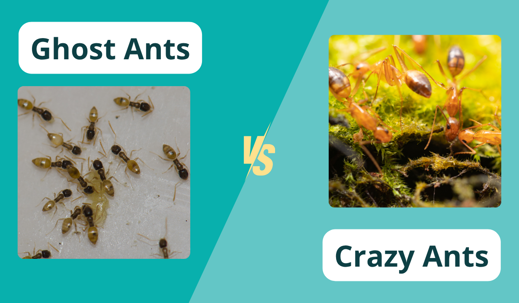
Ghost ants are tiny ants, measuring around 1.5 mm. Their dark heads and thorax contrast with their pale or translucent legs and abdomen, making them seem like they disappear into surfaces. This small size is part of what makes them hard to notice until you have a full-blown ant infestation.
Crazy ants are slightly larger and appear more uniformly reddish-brown or dark brown. Unlike ghost ants, they don’t have translucent parts. Their bodies are covered in fine hairs, and they look similar to Argentine ants or odorous house ants at first glance, but their erratic behavior sets them apart.
Watch How They Move
Movement is one of the fastest ways to tell these types of ants apart.
Ghost ants tend to follow straight lines and remain relatively calm, even when disrupted. Crazy ants, as their name suggests, move in a frantic, zigzagging pattern. They seem disorganized and scatter quickly when you try to wipe them away.
This behavior often leads homeowners to misidentify them as fire ants, but unlike fire ants, they are not as dangerous since they don’t have a stinger.
Pay Attention to Where You Find Them
Ghost ants love to nest in wall voids, under potted plants, or deep inside crevices and gaps in baseboards. You’ll often see them trailing near sinks, dishwashers, and other water sources. They are particularly attracted to sweet foods, especially those left out on countertops or inside unsealed packages.
Crazy ants usually start in outdoor nesting sites like mulch, landscaping debris, or even around electrical equipment. Once inside, they can spread quickly and form large colonies that split into new colonies when disrupted.
Examine Their Antennae and Legs
Ghost ants have short, slightly bent antennae that match their petite build. Crazy ants, on the other hand, have longer antennae and legs that give them a more spread-out, wiry look.
You might notice that crazy ants’ legs seem too long for their bodies, another trait that makes them easier to spot.
This difference is especially noticeable when comparing them to other common ants like black ants, pharaoh ants, or big-headed ants, which have more balanced proportions.
Consider How They React When Disturbed
Disturb a ghost ant trail, and they’ll usually scatter slightly but regroup quickly. In contrast, crazy ants scatter in every direction like they’ve been shocked. This chaotic behavior makes cleanup harder and often frustrates homeowners.
Their chaotic response makes baits less effective if misused. Unlike ghost ants, which take bait back to the colony, they may abandon trails altogether.
What to Do to Get Rid of Ants in Your Home
Now that you know which ants you’re dealing with, it’s time to break the cycle and stop the infestation. Here’s how to tackle them in your Florida home, step by step:
Identify and Eliminate Food Sources
The first step to pest management is addressing the food sources.
Ghost ants, in particular, are classified as sugar ants because they seek out sweet foods. Wipe down countertops, sweep up crumbs, and store items like cereal and sugar in airtight containers.
Crazy ants also feed on sugary substances, but they’re just as likely to forage for protein, like meat or pet food. Outside, they feed on honeydew secreted by aphids, which often attracts them to plants near windows or door frames.
Locate and Seal Entry Points
You’ll need to find where these ants are getting in.
Ghost ants often slip in through crevices, under doors, or around pipes. Crazy ants can enter from cracks in foundations, crawl spaces, or roof vents.
Use caulk to seal small openings, and inspect for gaps near utility lines or vents. Remember, Florida homes can shift slightly over time due to moisture, creating new entry points that need to be checked regularly.
Use the Right Type of Ant Bait
When it comes to ant control, using the right ant baits is key.
For ghost ants, choose sugar-based baits that mimic their natural preferences. These work best when placed along active trails near sinks, baseboards, or wall voids.
Crazy ants are trickier. Their chaotic movements and rapid trail-switching can make it harder to get them to take bait consistently.
If DIY efforts don’t work, consider a professional pest control service for targeted treatments.
Remove Trails and Pheromones
Once you’ve treated the colony, scrub the areas they traveled to remove their chemical trails. A vinegar and water mix works well. Clean around potted plants, garbage bins, and any area you’ve seen consistent traffic.
Without trail removal, worker ants will keep leading others right back to the same spots, even if you’ve removed the nest.
Consider Calling Pest Control Services
Both ghost ants and crazy ants are invasive species that form large, resilient ant colonies. When nests are hidden deep in wall voids or spread across your property, pest control services can save you time and frustration.
At Native Pest Management, we treat all types of ant nests, from stubborn ghost ant trails inside your kitchen to outdoor crazy ant infestations near your AC unit.
Our team understands the unique challenges of Florida homes, including how termites, carpenter ants, and other pests can coexist with these ants and create bigger problems if not addressed.
Reach out to our team today and take the first step to reclaiming your space.
Frequently Asked Questions
Can ghost ants or crazy ants live inside appliances?
Yes, both species may nest in warm, hidden spaces inside electronics or appliances. Crazy ants, primarily, are known to invade devices like routers or outlets, which can lead to short circuits or malfunctions.
Do ghost ants or crazy ants show up more after heavy rain?
Yes, heavy rain can flood outdoor nests, pushing ghost ants and crazy ants to seek dry shelter indoors. Florida’s frequent storms make this acommon trigger for sudden home infestations year-round.
Are natural repellents like essential oils effective against these ants?
Essential oils like peppermint or tea tree may disrupt trails temporarily, but won’t eliminate colonies. These ants form large nests, so natural methods alone won’t solve the infestation or prevent new colonies from forming.